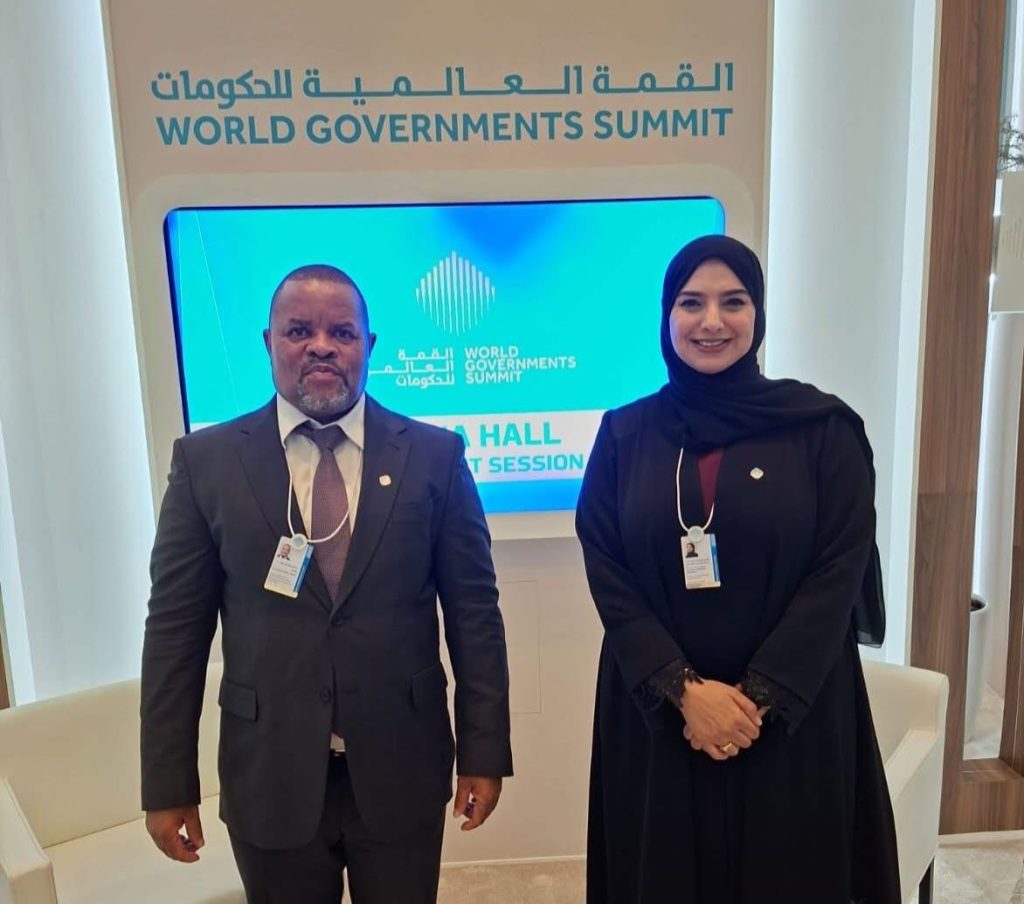
Ministro da Agricultura, Ambiente e Pescas de Moçambique, Roberto Mito Albino (esquerda), e a Ministra das Mudanças Climáticas e do Meio Ambiente dos Emirados Árabes Unidos, Amna Al Dahak, à margem da Cimeira Global de Governos, que decorre na cidade do Dubai.
Maputo, 6 Feb (AIM) – The governments of Mozambique and the United Arab Emirates (UAE) have expressed their willingness to deepen bilateral cooperation in the sectors of agriculture, food security and environmental protection.
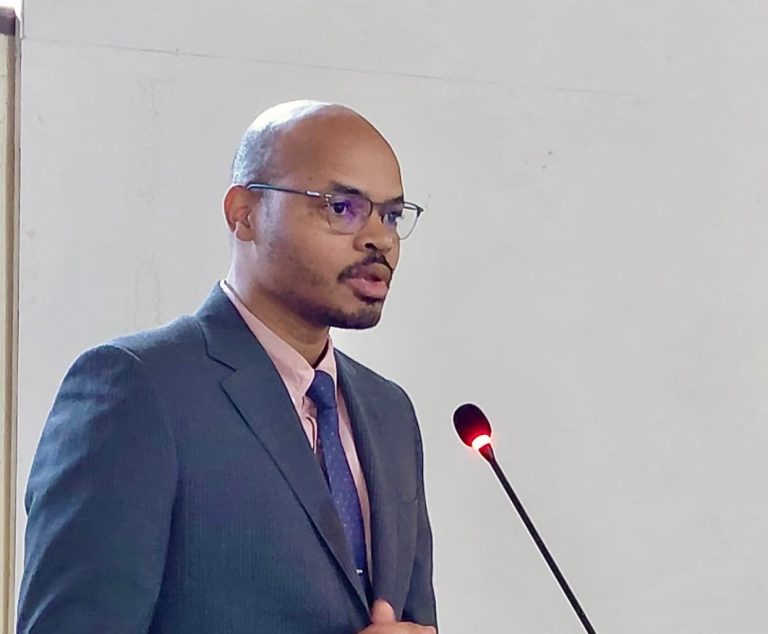
According to Mozambican Agriculture Minister, Roberto Albino, who was speaking on Thursday, in Dubai, on the sidelines of the session on “the future of energy and industries, as part of Mozambique’s participation in the World Governments Summit, the cooperation is being redesigned within the framework of strengthening strategic relations between the two countries.
The Minister explained that, after meeting his Emirati counterpart, Amna Al Dahak, the two countries agreed to create a joint technical team, which will be responsible for operationalizing the action plan foreseen in the Memorandum of Understanding in the field of environment and biodiversity.
“Small-scale producers should be integrated to increase their income and contribute to the overall growth of the country. We also reject the idea that the industrialization of agriculture represents a threat to the environment. Today, to increase overall production, we focus on expanding areas, which leads to deforestation, because yields per hectare are low. Industrialization allows for greater production in a smaller area and with less environmental impact”, he said.
As an example, he highlighted the Mapai dam project in the southern Gaza province, noting that the infrastructure will allow for the concentration of high levels of agricultural production in a small area.
“With 200,000 hectares of irrigable land, we can obtain the yield that is currently achieved on about one million hectares with low productivity levels. The dam will also allow for flood control, energy production, and environmental protection in the Limpopo basin”, he said.
Regarding technological innovation, Albino said that “it is possible to industrialize agriculture in an environmentally friendly way. It must include conservation practices, rational use of inputs, and technologies that eliminate the need for fossil fuels harmful to the environment.”
“Mozambique cannot remain on the sidelines of global trends linked to new technologies and artificial intelligence. The world is becoming digital and Mozambique must be digital”, he added.
Nl/Ad/