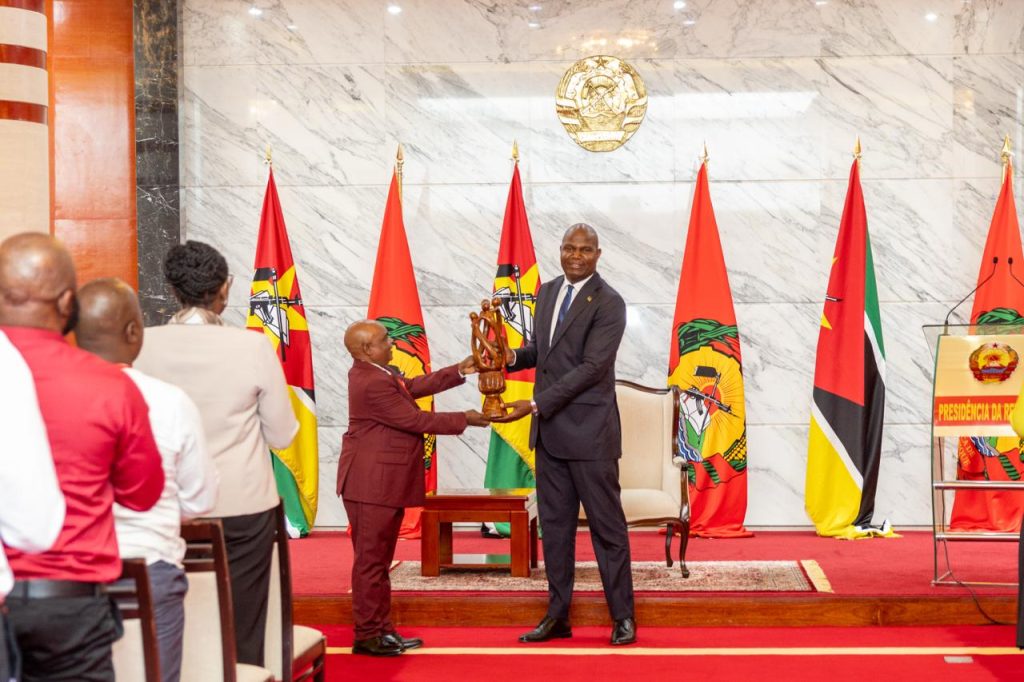
Maputo, 13 Out (AIM) – Mozambican President Daniel Chapo has urged the Ministry of Education to develop mechanisms aimed at recognizing teachers who distinguish themselves by merit, dedication, competence and responsibility.
Speaking on Monday in Maputo, during the ceremony marking the Mozambican Teachers’ Day – which is celebrated on October 12 to commemorate the creation of the National Organization of Teachers (ONP) – career management requires more responsive, transparent and sustainable responses to the country’s education system.
“The government is committed to continue to invest in education, in line with the country’s possibilities. The appreciation of teachers must be accompanied by fulfillment of professional duties, including ethics, integrity, assiduity and excellence quality of the teaching process”, he said.
The day was celebrated at a moment when the country’s National Association of Teachers (ANAPRO) has been calling for a response to the long-running dispute over the government’s failure to pay teachers for overtime. ANAPRO once said that it has lost confidence in the government institutions it was negotiating with.
Anapro claims that all means of dialogue had been tried, without any satisfactory reply to their demands. The organization also says that it had approached the Education Ministry, the Finance Ministry, the Prime Minister’s Office, the Administrative Tribunal, the Ombudsman and the country’s parliament, the Assembly of the Republic, all to no avail.
According to Chapo, the growth of the school population constituted a national conquest, but required greater investment in teachers, classrooms, teaching materials and appropriate conditions for the teaching and learning process.
He pointed out that demographic growth represents two major challenges for the education and health sectors, arguing that population evolution must be accompanied by economic growth and, above all, by increasing national output.
Citing the National Development Strategy 2025–2044, the President said that human capital development will continue to be a priority, “through improving school infrastructure, strengthening teacher training and promoting safe and inclusive learning environments.”
“Through education we teach people tolerance, respect for others, respect for diversity and the valorization of citizenship. The ambition to achieve economic independence starts in schools, which must train competent, creative and innovative citizens, capable of researching, undertaking and transforming national resources into wealth”, he said.
(AIM)
SN/Am/