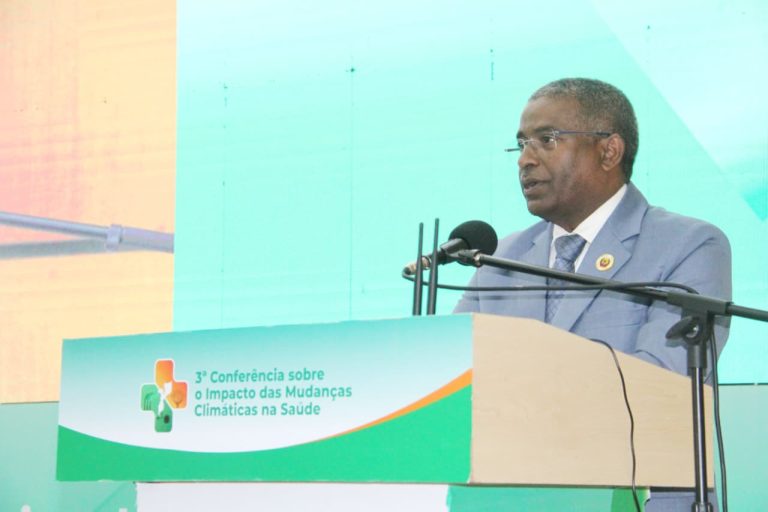
Maputo, 20 Oct (AIM) – The Mozambican government plans to invest approximately 235 million US dollars into adapting the health sector to climate change.
According to the Health Minister, Ussene Isse, speaking on Monday, in Maputo, at the opening of the Third Conference on the Impact of Climate Change on Health, the initiative aims to prevent an estimated 30,000 deaths and the loss of more than 1.6 million years of human life.
This investment is outlined in a roadmap designed to bolster the resilience of the National Health System against the effects of climate change, which are becoming increasingly frequent and intense within the country. “This is an unequivocal statement that Mozambique will not be a passive victim of climate change. Instead, it will build a health system that protects its citizens, strengthens the economy, and contributes to regional stability”, he said.
The minister said that climate change represents one of the greatest current threats to public health, driven by the rising frequency and severity of extreme weather events, such as cyclones, floods, droughts, and heatwaves.
He explained that these phenomena directly disrupt the operation of health services and increase the risk of disease outbreaks—such as cholera—while also exacerbating malnutrition, mental health issues, and other clinical conditions.
Mozambique is considered one of the countries most vulnerable to extreme weather events. In recent years, it has experienced cyclones, floods, and other phenomena that have resulted in the loss of human life, the destruction of infrastructure, and the disruption of essential services.
Among the events that have affected the country are cyclones Idai, Kenneth, Eloise, Freddy, Chido, Dikeledi, and Gezani, as well as the floods that struck the southern region this year.
Meanwhile, the minister announced an achievement for the health sector: the recognition of the National Tuberculosis Reference Laboratory, part of the National Institute of Health (INS), as a member of the global network of supranational reference laboratories for this disease.
“Last Friday, October 16, the World Health Organization announced that the National Tuberculosis Reference Laboratory at the National Institute of Health has joined the global network of supranational tuberculosis laboratories,” he stated.
According to Isse, this designation represents international recognition of the Mozambican laboratory’s technical and scientific quality in tuberculosis diagnosis, and it entrusts the country with a greater responsibility to provide specialized technical support to other nations.
He also said that joining this network also marks a step forward for Mozambique and the African continent, which now has an increased number of reference laboratories in this field, following the recognition granted to both Mozambique and Rwanda.
Am/