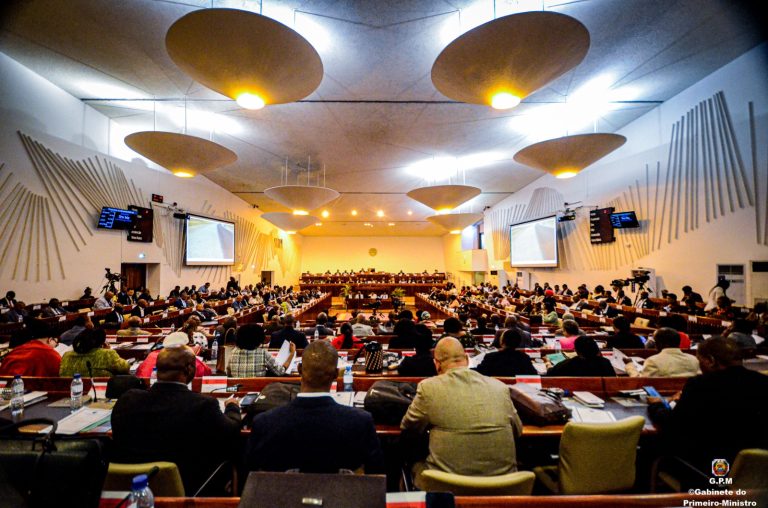
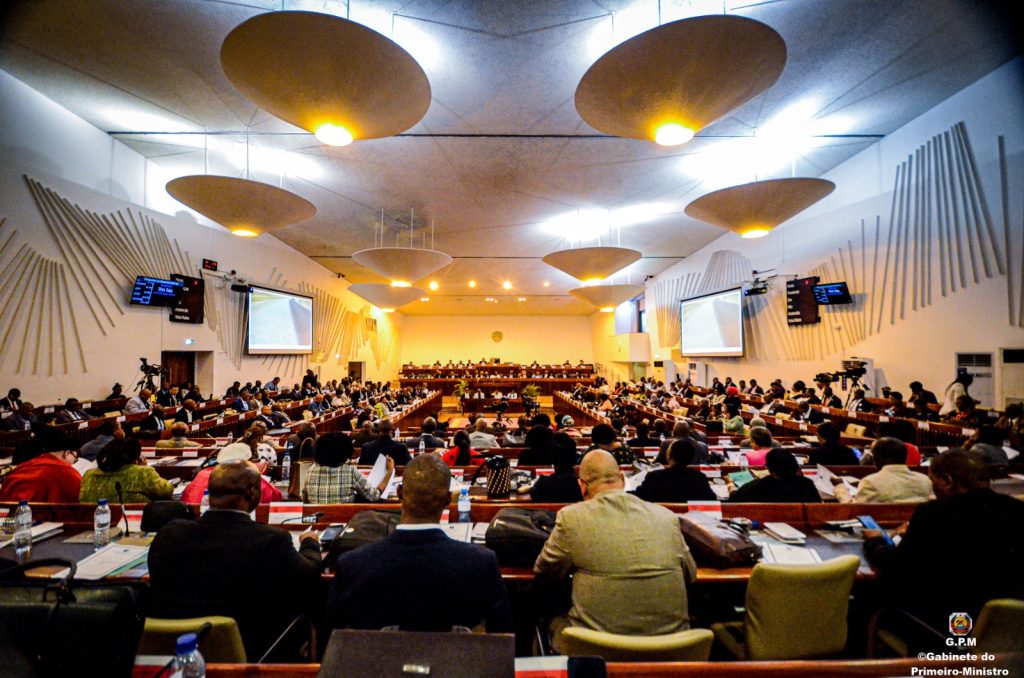
Assembleia da República, parlamento moçambicano
Maputo, 26 Nov (AIM) – Opposition parliamentary groups have questioned discrepancies in the government’s 2025 public accounts, demanding explanations for differences between reported State revenue, total resources and public expenditure.
The issue emerged during Wednesday’s debate on the 2025 State General Account (CGE), which exposed divisions among the four parliamentary groups over budget execution, transparency and the management of public funds.
Aristides Novela from the Optimistic Party for the Development of Mozambique (PODEMOS), the country’s largest opposition party with 43 seats in parliament, said State revenue amounted to 364.5 billion meticais (5.7 billion US dollars), against a forecast of 385.9 billion meticais (6 billion US dollars), while expenditure reached 465.8 billion meticais (7.3 billion US dollars), resulting in a deficit of 101.3 billion meticais (1.6 billion US dollars).
However, government figures presented to parliament show total resources of 468.2 billion meticais (7.3 billion US dollars) and expenditure of 467 billion meticais (7.3 billion US dollars).
Novela called on the government to reconcile the figures, distinguishing between State revenue, total resources, financing and expenditure, so that parliament and citizens could understand where public money came from and how it was spent.
Carlos Manuel from Renamo parliamentary group also questioned the government’s management of public finances, accusing it of poor budget forecasting, weak revenue collection and inadequate expenditure management. He criticized the concentration of budget allocations at central government level and the lack of traceability of public funds.
He particularly questioned the contribution of liquefied natural gas (LNG) megaprojects in the Rovuma Basin, in northern Cabo Delgado province, arguing that the revenue generated by these investments was not adequately reflected in the budget.
Manuel accused the government of being tougher on ordinary taxpayers than on large mining and oil companies, arguing that communities are not receiving adequate benefits from the country’s natural resources.
Laurinda Cheia from MDM (Mozambique Democratic Movement) raised concerns over alleged irregularities in public financial management and the implementation of the State Electronic Financial Administration System (e-SISTAFE).
Citing a report by the Administrative Tribunal, the body responsible for checking the public expenditure, she said that only 34 of 73 scheduled audits had been carried out, accusing the government of obstructing the auditing process. She also claimed that the audits conducted covered only the southern provinces.
The MDM parliamentary group rejected the account and demanded that public officials implicated in irregularities identified by the Administrative Tribunal be held accountable.
The ruling Frelimo parliamentary group adopted a more favourable position. Speaking during the debate, former Prime Minister Alberto Vaquinha acknowledged shortcomings but praised the government’s efforts to implement the Administrative Tribunal’s recommendations, particularly those concerning internal controls and the reduction of accounting irregularities.
(AIM)
Ac/Zt/Am/