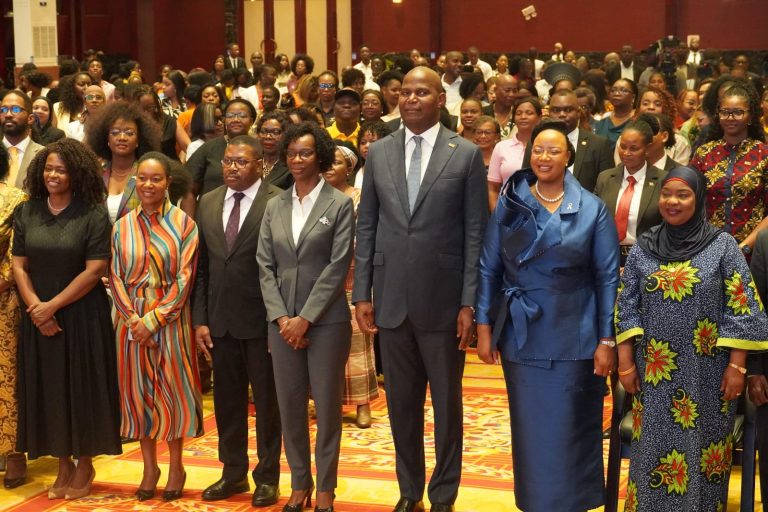

Maputo, 17 Jan (AIM) – Mozambique’s former Prime Minister, Luisa Diogo, died on Friday morning in a Portuguese hospital, after a long illness.
Diogo was born on 11 April 1958, in Magoe district, in the central Mozambican province of Tete. She received a bachelor’s degree in economics from Maputo’s Eduardo Mondlane University in 1983. She was awarded a master’s degree in financial economics at the School of Oriental and African Studies (SOAS) of the University of London in 1992.
She began her career in the Mozambican Finance Ministry in 1980, when she was still a student. She became a head of department in 1986, and was promoted to national budget director in 1989.
Diogo then went to work for the World Bank as the Bank’s programme officer in Mozambique.
President Joaquim Chissano appointed her Deputy Minister of Finance in 1994, and she was promoted to Minister of Planning and Finance in 2000.
Diogo became Mozambique’s first woman Prime Minister in 2004, a post she held alongside that of Finance Minister until 2005. When Armando Guebuza was elected President in 2005, he re-appointed Diogo as Prime Minister.
In 2003, the then United Nations Secretary-General Kofi Annan appointed Diogo to the UN Commission on the Private Sector and Development. In 2006, Annan appointed her co-chair of a High-Level UN Panel on United Nations Systemwide Coherence, intended to explore how the UN system could work more coherently and effectively across the globe in development, humanitarian assistance and the environment. She was also a member of the Commission on Effective Development Cooperation with Africa set up by Danish Prime Minister Anders Rasmussen.
Diogo’s knowledge of the international financial system, and her negotiating skills, were doubtless key in securing the loans and grants the government needed to implement its policies.
She was a major figure in the government’s drive to reduce poverty and promote gender equality. She was recognised as one of the 100 most influential people in the world by Time magazine in 2004, and also recognised as one of the most powerful women in the world by Forbes magazine in 2006 and 2008.
In 2014, Diogo ran to become the candidate of the ruling Frelimo Party in the Mozambican presidential election of that year. Although she was easily the best qualified of the candidates, she was defeated on the second round of voting by the then defence minister, Filipe Nyusi.
Diogo did not return to government, but became a prominent figure in Mozambican business. In 2012, she became Chairperson of the Board of Directors of Barclays Bank-Mozambique (which later became Absa Bank of Mozambique)
In 2018, she became chairperson of the Beluluane Industrial Park, on the outskirts of Maputo, where the country’s largest factory, the MOZAL aluminium smelter is located.
Diogo was married to prominent lawyer Albano Silva, with whom she had three children.
In a message of condolences, President Daniel Chapo said Mozambique “has lost an illustrious daughter, whose dedication to the public cause, and to the development of our country, will remain in the memory of all of us”.
(AIM)
Pf/ (514)