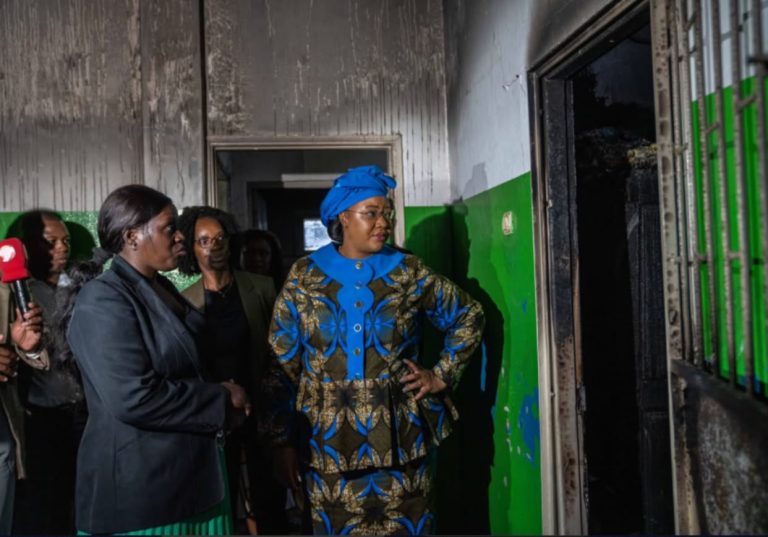

Garimpo ilegal na mina Seis Carros, província de Manica
Maputo, 11 May (AIM) – The Parliamentary Commission of Inquiry (CPI), which was created last December to assess the impact of environmental pollution resulting from mining activity in the central Mozambican province of Manica, calls for immediate and complete closure of all illegal mining sites.
The CPI was set up after the country’s General Inspectorate of Mineral Resources and Energy (IGREME) concluded that mining activity in that province was affecting important sources of drinking water such as the Revue river and the Chicamba reservoir, causing serious public health problems.
The main problem is the use of mercury in washing gold. Mercury is highly toxic, but mining operations have made little effort to reduce their use of it. Analysis of the waters of the Manica rivers and of the Chicamba reservoir has revealed the presence not only of mercury, but also of other heavy metals, including lead, cadmium and arsenic.
The Operational Command, coordinated by the Defense Minister, found that several licensed companies were operating without environmental restoration plans or waste containment systems, and they were also abandoning mining equipment after use and violating labour laws and workers’ rights.
According to CPI investigation report, which was presented on Saturday to the country’s parliament, the Assembly of the Republic, also recommends that the health, environment, and fisheries sectors periodically carry out complete laboratory analyses of the water quality of the Chicamba Reservoir, its tributaries, and associated biota, with particular emphasis on fish resources.
The document also calls for surveillance and patrolling in mining areas with a greater presence of the Mozambican Defense and Security Forces (FDS).
“Control over the use of hazardous substances must be strengthened as well as cooperation with neighboring countries in order to control the smuggling of explosives and chemicals”, reads the document.
The Commission also suggests better organization of artisanal mining in controlled and legal forms, and training local leaders on mining legislation and good environmental practices.
The investigation also points out the need to implement a national program for training and equipping district administrations, to assign specialized technicians in environmental and mining management, in addition to facilitating mandatory, permanent, and real-time access to the national mining registry.
“The government should provide minimum logistical, technological, and laboratory resources for effective on-site monitoring, including requiring all concessionary companies to develop, publish, and implement social and environmental responsibility plans, subject to annual independent audits, mandatory targets for hiring local labor, and community impact indicators”, reads the analysis.
The CPI also requests that the government conduct a national awareness campaign on the risks associated with the use of cyanide, mercury, and illegal mining practices, as well as implement training programs in sustainable mining techniques aimed at artisanal miners and local communities.
It also calls on the government to promote mandatory biometric registration of artisanal miners, including the definition of authorized zones, operating rules, and production limits.
Ac/Ad/