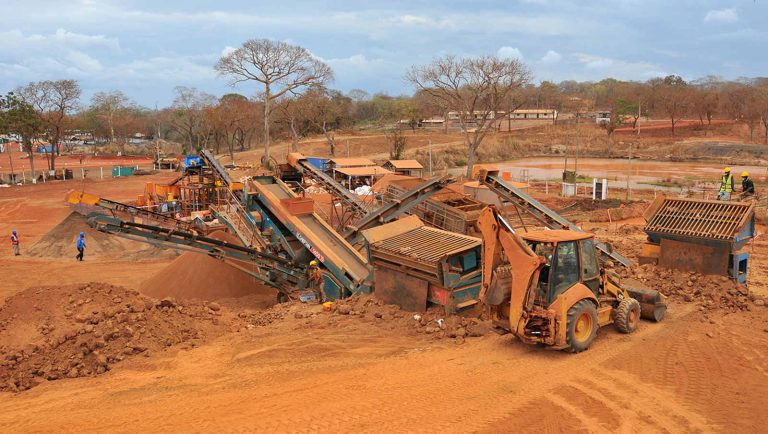

Fabrica de processamento de caju
Maputo, 17 May (AIM) – Mozambican President, Daniel Chapo, believes that industrialization of the cashew value chain is a crucial condition for achieving economic independence and strengthening national productive capacity.
According to Chapo, speaking at the launch ceremony of the book entitled “Cashew Economy in Mozambique: The Context of Bretton Woods Policies and the Assumptions of Reindustrialization Engineering”, authored by academic and senior member of the ruling Frelimo Party, António Niquice.
“It is not enough to produce, it is necessary to transform. It is not enough to export resources, it is necessary to add value”, he said, recalling that Mozambique was once the world’s largest producer of cashew nuts.
Currently, it is among the top seven.
The president believes that true development only happens when national resources are converted into industry, employment, innovation, and improved living conditions for the population.
He explained that the reindustrialization of cashew nuts should also represent a concrete opportunity for economic inclusion and empowerment of women.
“Niquice’s work is an important scientific and patriotic contribution to the debate on industrialization, economic sovereignty, and the structural transformation of the national economy. The book constitutes a profound reflection on the country’s historical challenges and the necessary paths to building a more resilient, modern, and productive economy”, he said.
Chapo also called on universities, researchers, and young Mozambicans to deepen the study of the national economy in order to produce knowledge oriented towards the country’s development.
“The structural transformation of our economy also begins with the production of ideas. Mozambique’s economic independence will depend on the national capacity to transform natural resources into concrete results to the people.
According to the President, also speaking in Ribáuè district, northern province of Nampula, the country must invest in more efficient, organized and predictable agricultural marketing as a way to reduce the economic vulnerability of rural families.
Strengthening marketing mechanisms, he said, constitutes a strategic response to the challenges faced by national producers, especially in the face of the impacts of climate change.
“More efficient, organized and predictable agricultural marketing is an essential component of the response to the economic vulnerability of rural families,” he said.
Despite the resilience demonstrated by Mozambican farmers, he said, the sector remains exposed to the effects of droughts, floods, cyclones and other climate shocks.
According to Chapo, approximately 441,000 hectares were affected by extreme weather events during the current agricultural campaign, of which approximately 54,000 hectares were lost, affecting nearly 300,000 producers across the country.
“Behind these numbers are families, dreams, and life stories,” he said.
SNN/ad/