
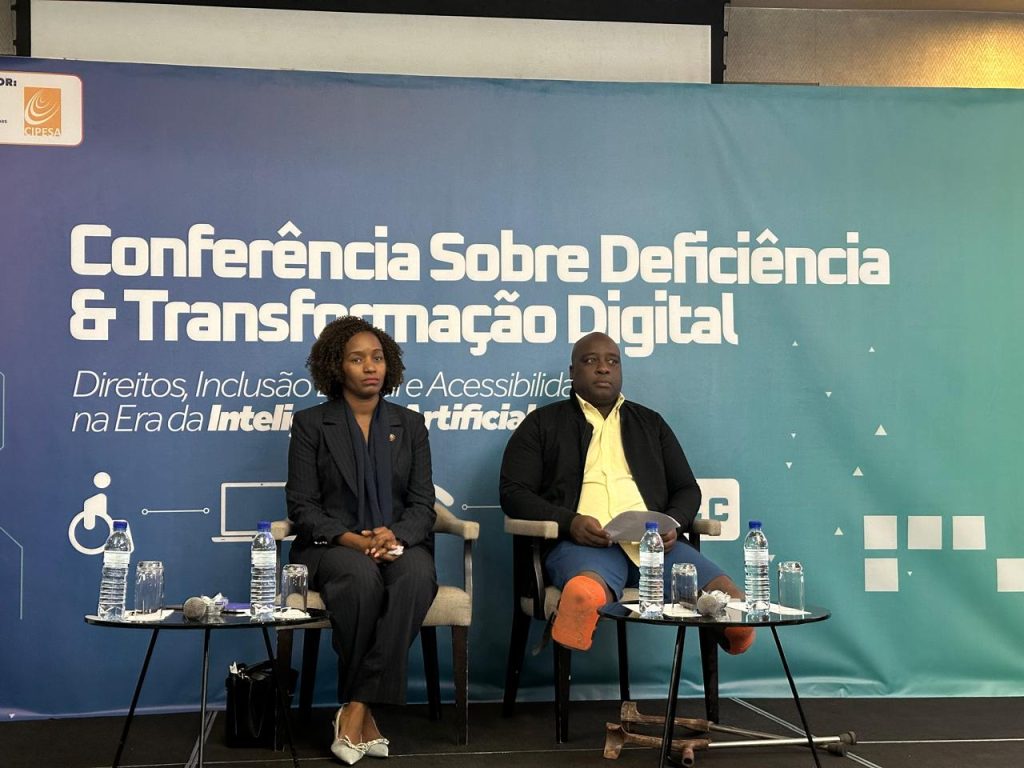
Maputo, July 9 (AIM) – The Mozambican Association of People with Disabilities (FAMOD) calls on the government to ensure that the country’s ongoing digital transformation process is inclusive and democratic.
Clodoaldo Castellano, FAMOD Executive Director, speaking on Thursday at the Conference on Disability and Digital Transformation, held under the motto “Rights, Digital Inclusion, and Accessibility in the Age of Artificial Intelligence”, people with disabilities should no longer be viewed merely as beneficiaries of digital transformation but should instead take on an active role in the design, development, and implementation of new technologies.
“We want people with disabilities to be agents of digital transformation, innovators, decision-makers, and participants in the technology design process. Many public services and digital platforms continue to be developed without addressing the specific needs of this social group, creating barriers to accessing information, education, employment, connectivity, and other essential services”, he said.
Castellano also drew attention to the situation of women with disabilities, who face additional obstacles in accessing the Internet, computers, and other technological devices. “This scenario requires a coordinated response involving the government, telecommunications companies, and other sector stakeholders”, he said.
According to official data, although Mozambique currently has approximately 19.1 million active mobile connections and 7.12 million internet users, about 80.2 percent of the population remains without network access, exacerbating inequalities in access to digital technologies.
For his part, Zeca Chaúque, FAMOD chairman, warned that digital transformation could become a new factor of social exclusion “if public policies do not incorporate principles of accessibility and respect for the rights of persons with disabilities from the very design stage.”
“The digital divide manifests itself through expensive devices, unaffordable mobile data, and inaccessible platforms, content lacking alternative formats, and low levels of digital literacy”, he said.
Chaúque advocated that investments in digitalization and artificial intelligence include funding for assistive technologies, capacity-building programs, and the effective participation of organizations representing persons with disabilities.
Igna Maculi, Inspector General at the Minister of Communications and Digital Transformation, said that the government is committed to an inclusive digital transformation, noting that technological modernization should serve as an opportunity to reduce historical inequalities and promote greater social justice.
“Digital transformation should not be viewed merely as a technological process, but as a strategic opportunity to rectify inequalities and foster the inclusion of all citizens. The government is implementing structural instruments, including the National Digital Transformation Strategy and the National Digital Inclusion Strategy, which are aimed at expanding access to information technologies, with a special focus on the most vulnerable groups”, he said.
(AIM)
Lt/Am/