Maputo, 02 Sep (AIM) – Mozambican President Daniel Chapo believes that the true strength of a country’s Constitution is measured by its capacity to transform people’s lives, ensuring that the rights enshrined within it are effectively exercised by citizens.
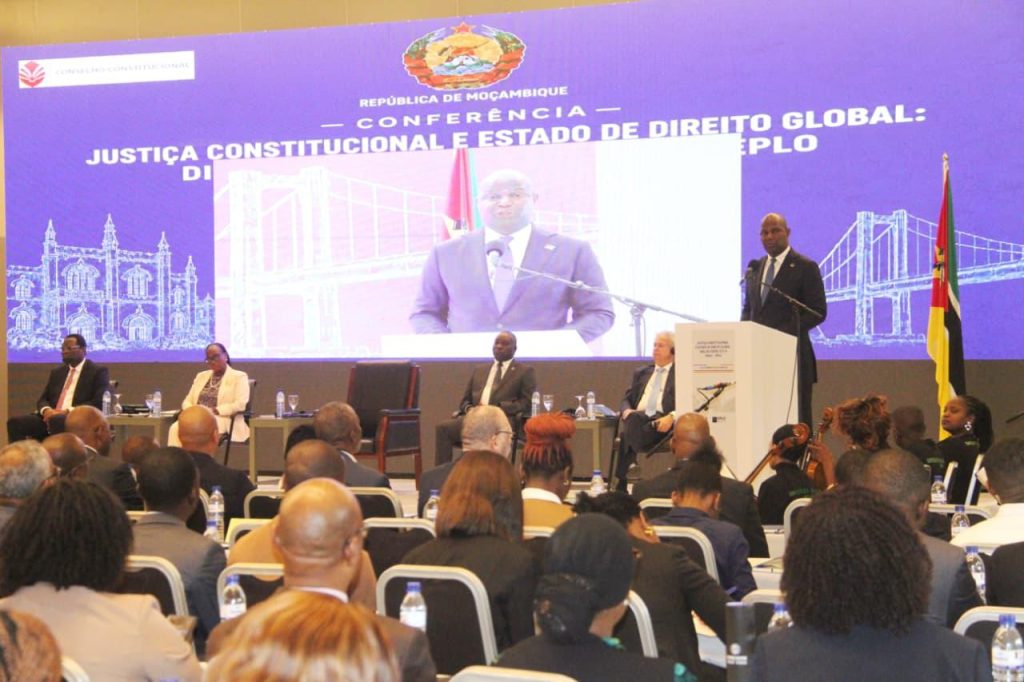
Speaking at the opening of the international seminar entitled “Constitutional Justice and the Global Rule of Law: Dialogue between the Constitutional Council of Mozambique and the Global Commission on the Rule of Law of the European Public Law Organization”, the Constitution on paper proclaims rights, enshrines equality, and guarantees access to justice, but in life demands that these guarantees be effectively exercised by all citizens.
“This realization must reach the poor citizens, those living in rural areas, women, youth, children, the elderly, and persons with disabilities, ensuring them equal dignity and protection before the State. The Constitution in life requires courts that are accessible, swift, impartial, and close to the citizen, as well as compliance with the law and respect for institutions and organs of sovereignty”, the President said.
According to Chapo, assessment of State action must be linked to the concrete results produced in the lives of citizens. “Citizens do not judge the State solely by the quality of our laws, speeches, or plans. They judge us by the results we produce in their lives, because No one is above the Constitution”, he said.
For his part, Andreas Mavroyiannis, Chair of the Global Commission on the Rule of Law of the European Public Law Organization (EPLO), argued that Africa must take an active role in shaping the global debate on the rule of law, moving beyond being viewed merely as a subject of study.
“Africa should not be just a place of study. Africa is a place of dialogue, contribution, and leadership. The discussion on the rule of law in Africa is not merely a geographical matter, it also encompasses intellectual, institutional, and symbolic dimensions.
According to Mavroyiannis, if the work of the Global Commission on the Rule of Law aims to be truly global, the debate cannot remain geographically concentrated in Europe but must incorporate diverse legal histories, constitutional experiences, and institutional realities.
“Legal systems are shaped by their histories and cultures, and that the Commission seeks to identify principles that can be shared among different traditions, without disregarding the specificities of each society”, he said.
SN/Am/