
Maputo, 28 Nov (AIM) – Senior journalists call for strengthened investment to recover the prestige of the state-owned Mozambique Information Agency (AIM) and consolidate its role as a benchmark for the production and dissemination of information about the country and the southern Africa region.
The journalists in question are Gil Laurenciano, Jorge Matine, and Fernando Gonçalves, AIM former journalists.
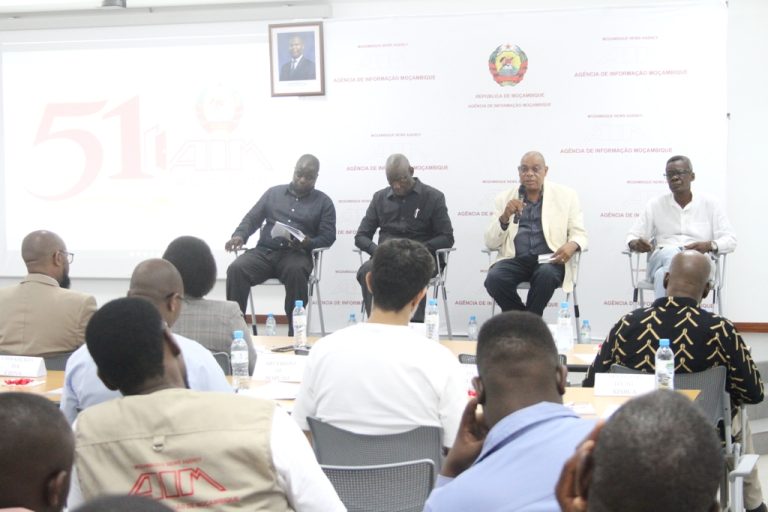
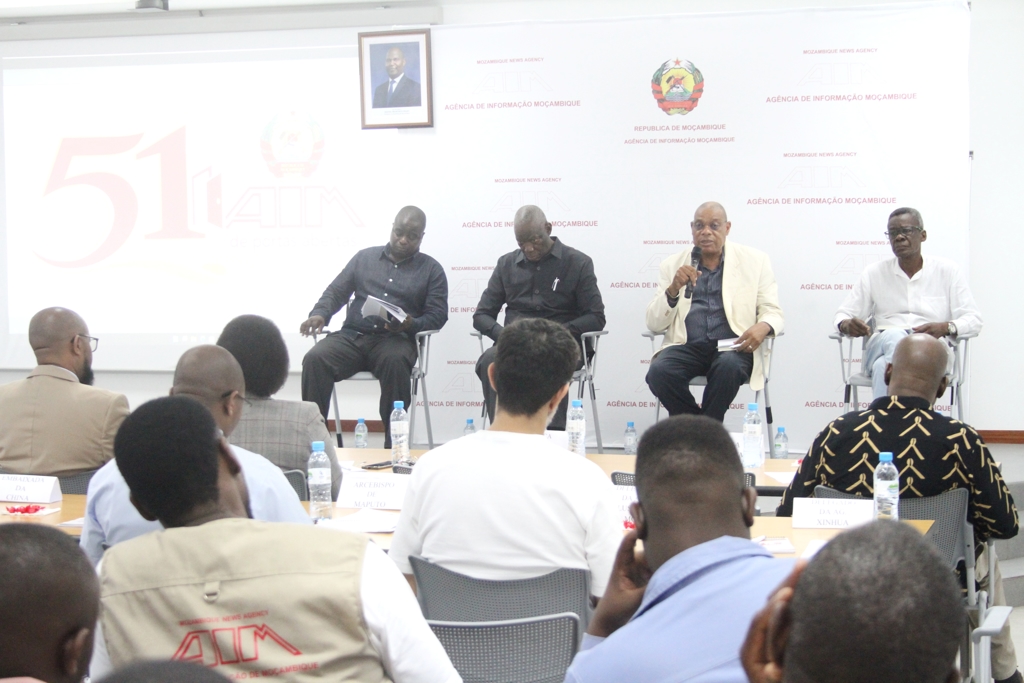
Speaking at the panel titled “The role of AIM in shaping public opinion and projecting the country’s image abroad”, which was held as part of the ceremony marking the 51 years of AIM founding, Laurenciano highlighted AIM’s international vocation, noting that the agency should produce content capable of sparking the interest of foreign media outlets. However, he said, it demands huge investments.
“AIM must be read abroad,” he stated, recalling that the institution distinguished itself from national newspapers through its mission to provide content about Mozambique to international audiences.
He explained that the interaction with foreign correspondents and international news agencies contributed to the professional development of AIM’s staff.
According to Laurenciano, AIM was a crucial outlet in covering the atrocities of the Apartheid regime in South Africa, as well as covering the Mozambican civil war. The coverage of these events enabled the agency to place its brand in the international sphere.
Laurenciano further argued that journalists should question public officials without fear of reprisal, arguing that “we must not confuse respect with fear,” as they are two distinct things.
For his part, Jorge Matine, former director of the daily newspaper “Notícias”, underscored AIM’s contribution to providing information to national media outlets and to disseminating the reality of Mozambique abroad.
Matine recalled that, during the civil war, the agency played an important role in disseminating news from areas to which other media outlets had little access. He therefore argued that AIM should be revitalized and provided with the resources necessary to fulfill its mission.
“AIM cannot survive solely on donations, leftovers, and the goodwill of others. This institution must receive transparent funding through the State Budget, rather than relying on sporadic support”, he said.
Fernando Gonçalves, who worked at AIM for 12 years, recalled that the agency was established within an international context defined by the debate over a “New World Information and Communication Order.”
“Its primary mission was to produce information about Mozambique and to inform the world about what was happening in Mozambique,” he explained, highlighting the agency’s cooperation with international news organizations and its role in the creation of the Pan-African News Agency (PANA) in 1979.
He also praised the quality of the agency’s photographic service and “its images of the war and various massacres helped bring the reality of the situation in Mozambique to the world’s attention.”
Gonçalves also noted that information and communication represent a form of power, and that a country’s international projection requires investment.
AIM was established on November 22, 1975, just a few months after the proclamation of national independence.
(AIM)
NL/Am/