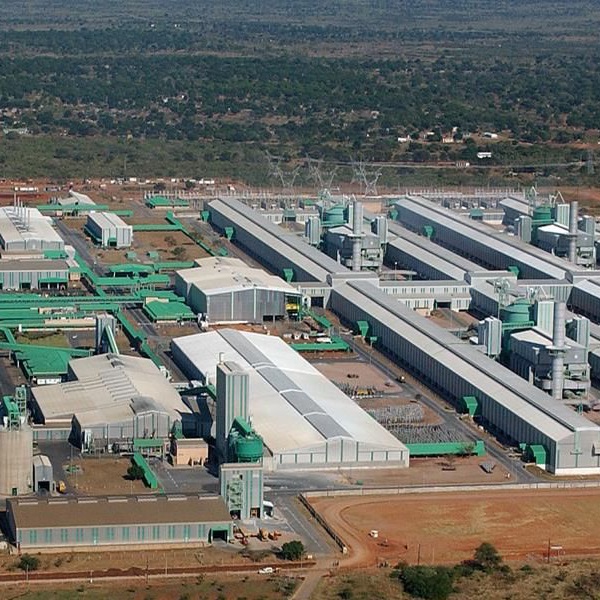
Fábrica de Alumínio Mozal
Maputo, 14 Mar (AIM) – The Mozambican government has admitted that the closure of the Mozal aluminium smelter, on the outskirts of Maputo, will have a major impact on the country’s economy, especially because of the linkages between Mozal and a wide range of companies that supply the smelter with goods and services.
Mozal is the largest company in Mozambique, but its majority shareholder, the Australian group South32, says it cannot continue aluminium production at the current cost of electricity (which, as for any aluminium smelter, is the main input).
Negotiation on the electricity prices have been under way for months, with no sign of agreement. Mozal claims that it will no longer be profitable if it has to buy electricity at the old price. But the government argues that the proposals from Mozal amount to a demand that the government subsidise South32.
The smelter has been gradually running down its production, and as from the coming weekend, it will switch to a “care and maintenance” regime. Mozal will not close down, but resuming aluminium production would take perhaps 12 months and be very expensive.
Speaking to reporters on Friday, the government spokesperson and Minister of State Administration, Inocencio Impissa, said that the aluminium ingots produced by Mozal “had a major impact on the balance of trade. This was one of our main sources of export revenue”.
The end of aluminium production is scheduled for Sunday, 15 March. This decision will affect about 1,100 people directly employed by Mozal and 5,000 indirect jobs.
The government has not given up all hope: Impissa believed it might still be possible to reach a solution acceptable to the company and the government.
But where would the power Mozal needs come from? To run at full production, Mozal needs 950 megawatts, and, according to Impissa, Mozambique is not able to supply that amount.
“The current supplier of power to Mozal is South Africa, but South Africa is also unable to supply that amount”, he said. But Impissa did not know why South Africa claimed it did not have the electricity to keep Mozal running.
If there was a guaranteed source of power, then negotiations could have continued, with possible eventual agreement on the price. But with the smelter running only on a “care and maintenance” basis, the likelihood of agreement seems remote.
(AIM)
Pf/ (395)