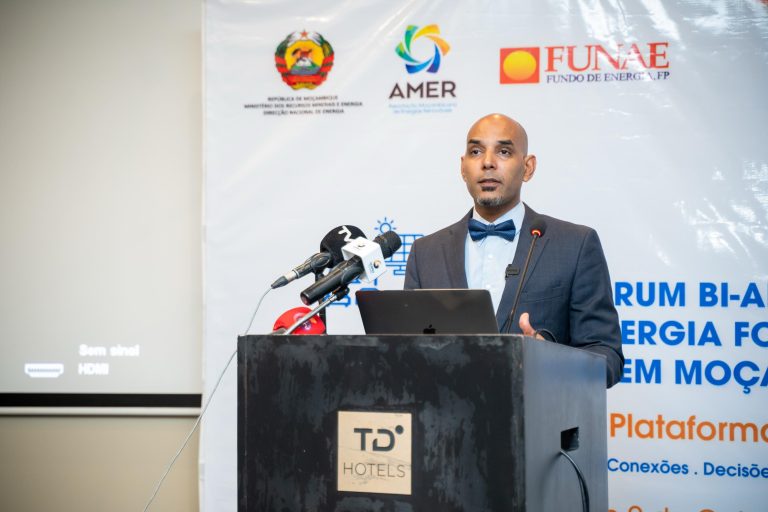
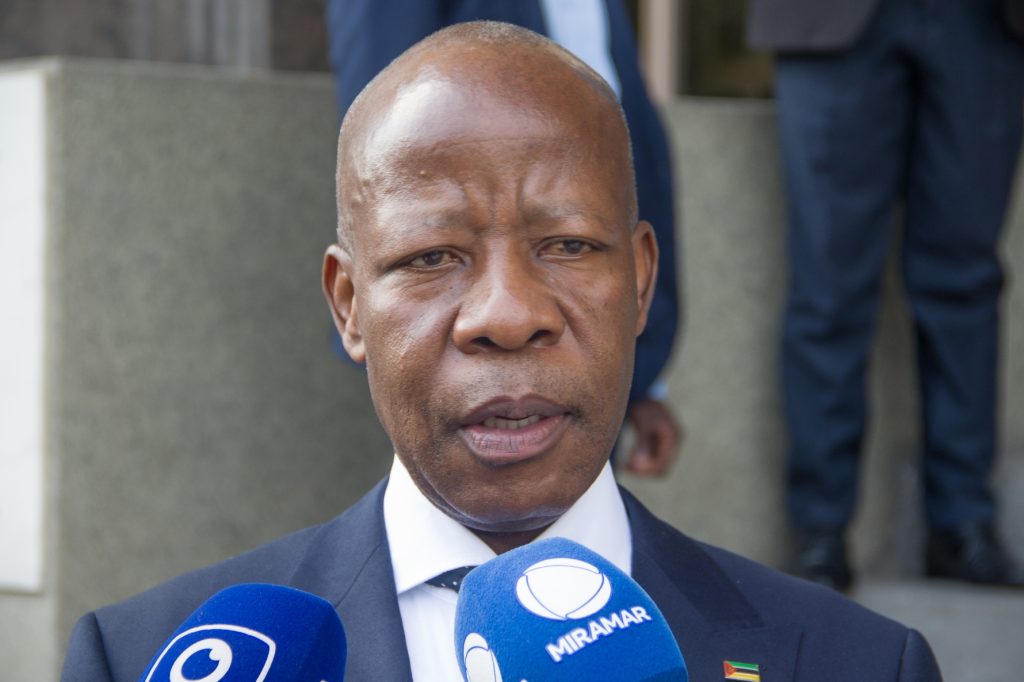
Presidente do Tribunal Supremo, Adelino Muchanga, em conferência de imprensa. Foto de Carlos Júnior
Maputo, 27 Mar (AIM) – The President of Mozambique’s Supreme Court , Adelino Muchanga, has revealed that the number of pending cases in the country’s law fell over the past year by 4.8 per cent.
According to Muchanga, who was speaking at the opening of the justice sector review meeting, which assesses results achieved throughout 2025 and the main challenges facing the functioning of the courts, the number of pending cases fell from 150,229 in 2024 to 142,641 by the end of December 2025.
“During the period under review, the law courts closed 183,309 cases, a number below the planned target of 202,166 cases”, he said.
However, during the same period, 175,721 cases were filed, meaning that the courts managed to solve more cases than were submitted throughout the year.
“175,721 cases were filed and 183,309 were closed, which demonstrates a significant effort to reduce the volume of pending cases,” Muchanga said.
He explained that these results were achieved in a particularly challenging context for the judicial system, marked by economic difficulties and resource limitations.
“In a context of financial difficulties, we see a significant increase in judicial conflicts, where companies are facing bankruptcy, workers are fighting for their rights, and families are struggling with debt and misunderstandings,” he said.
He added that, in this scenario, the courts become spaces where citizens seek justice, balance, and hope.
Muchanga warned that the judicial system simultaneously faces serious constraints, mainly related to the shortage of human and material resources.
“The scarcity of resources contrasts with the overload of cases and structural limitations that hinder a quick and effective response to society’s expectations,” he said.
Despite these challenges, he stressed that justice must remain a fundamental pillar of the rule of law.
“In times of crisis, justice cannot and must not fail. On the contrary, it must assert itself as a guarantor of rights, order, and hope for a better future,” he declared.
To improve the sector’s performance, Muchanga called for modernizing the Judiciary, strengthening the training of justice professionals, improving court infrastructure, and investing in alternative dispute resolution mechanisms, such as judicial mediation.
Another point under analysis at the meeting is the proposed strategy for preventing and combating corruption in the courts.
“Where there is corruption, there is no true justice, only the appearance of justice,” Muchanga said.
(AIM)
NL/Ad/pf (393)