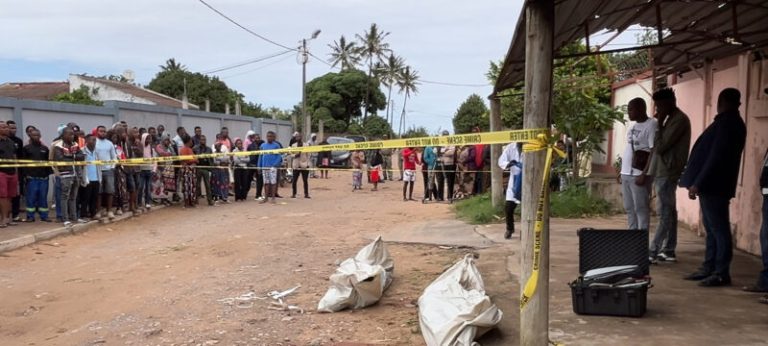

Carregamento de gas natural na bacia do Rovuma, província de Cabo Delgado em Moçambique, do empreendimento Coral Sul
Maputo, 24 Sep (AIM) – Mozambican government foresees an economic growth of 9.5 percent in 2029, which corresponds to a nominal Gross Domestic Product (GDP) of two trillion meticais (31.3 billion US dollars at the current exchange rate) for the first time.
The 2027 Fiscal Risks Report, released by the Ministry of Finance, will be driven by major gas projects. The government’s projections point to a gradual recovery in the economy, following estimated growth of just 0.6 percent in 2026, while growth is expected to accelerate to 1.54 percent in 2027, rise to 3.7 percent in 2028 and reach 9.5 percent in 2029.
The positive projection in 2029 depends on new natural gas projects in Cabo Delgado coming on stream. Without this contribution, the economy would grow by only 3.7 percent that year, 5.8 percentage points below the reference scenario assumed by the Government.
The forecasts also point to a gradual decline in average annual inflation, from 8.7 percent this year to 7 percent in 2027, 6.5 percent in 2028 and 5.5 percent in 2029.
“Tax revenue is expected to increase from 333.9 billion meticais in 2026 to 340.8 billion meticais in 2027, 362.2 billion meticais in 2028 and 397 billion meticais in 2029”, reads the document.
The report also forecasts a gradual improvement in public finances, from a deficit of 15.8 billion meticais in 2026 to surpluses of 18.9 billion meticais in 2027, 54.5 billion meticais in 2028 and 75.2 billion meticais in 2029.
Public debt is expected to decline from 72.1 percent of GDP in 2026 to 70.5 percent in 2027, 68.8 percent in 2028 and 67.1 percent in 2029, although it will remain above the regional benchmark threshold of 60 percent.
“These projections depend on the completion of natural gas investments, as well as developments in the security situation in Cabo Delgado and the international economic environment”, the document warns.
Mozambique’s National Petroleum Institute (INP) estimates that the country currently has around 180 trillion cubic feet (180 Tcf) of natural gas in situ, concentrated mainly in Areas 1 and 4 of the Rovuma Basin. The institute considers these resources strategic for boosting economic growth, strengthening energy security and promoting sustainable development.
Mozambique has three approved mega-development projects for the exploitation of liquefied natural gas reserves in the Rovuma Basin, classified among the largest in the world, off Cabo Delgado province in the north of the country.
Eni’s Coral Sul project is the only one in operation, since 2022. Investment in a second floating production platform, Coral Norte, was approved last October. The US$7.2 billion investment is expected to double production to seven million tonnes per year (mtpa) of LNG from 2028. A third unit is also under consideration.
After four years of suspension due to terrorist attacks in Cabo Delgado, the US$20 billion Mozambique LNG project (Area 1), operated by TotalEnergies, officially resumed in January and is expected to produce up to 13 mtpa from 2029. It will be followed by the US$30 billion Rovuma LNG project (Area 4), operated by ExxonMobil, with 18 mtpa expected after 2030. A final investment decision on that project is expected this year.
Am/