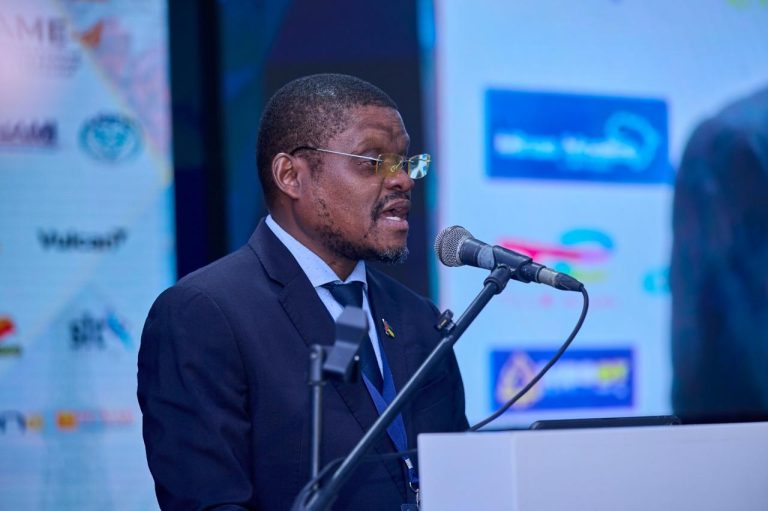

Manuel Chang, Mozambique’s former Finance Minister
Maputo, 7 Jan (AIM) – Mozambique’s former Finance Minister, Manuel Chang, has petitioned a federal court in the United States for early release.
Chang is serving an eight year sentence in the state of Connecticut, after he was found guilty on charges of fraud and money laundering arising from Mozambique’s largest financial scandal, known as the case of the “hidden debts”.
The request for early release is based on the 70 year old Chang’s state of health. He is said to be suffering from kidney problems, high blood pressure and diabetes. His legal team also claims that his advanced age makes it unlikely that he will re-offend. (in fact, around ten per cent of criminals released when they are over the age of 70, go on to commit other crimes. So the risk is not negligible).
The court should give its decision on 30 January. If Chang’s request is granted, he will be released immediately. He was approaching the age for parole, and his good behaviour while in prison would have made him eligible for release on 26 March. Hence, his request for early release will gain him just an extra two months of freedom.
The case was heard in January, in a New York court, which sentenced Chang, to eight and a half years imprisonment for his role in the hidden debts”.
This term refers to the scheme whereby three fraudulent Mozambican state companies, Proindicus, Ematum (Mozambique Tuna Company), and MAM (Mozambique Asset Management), all of them run by the security service, SISE, obtained loans of over two billion US dollars from the banks Credit Suisse and VTB of Russia.
No bank in its right mind would give such huge loans to companies with no track record and run by an intelligence service. But any qualms that Credit Suisse and VTB may have had were overcome when Chang, as Finance Minister, signed sovereign guarantees, which meant that, if the companies defaulted, the Mozambican state would repay the banks.
And, sure enough, all three companies soon went bankrupt, and so the hidden loans were transformed into hidden debts. The guarantees signed by Chang were illicit, since the loans smashed through the ceiling on lending established under the 2013 and 2014 budget laws.
The loans were a corrupt scheme designed by the Abu Dhabi-based group Privinvest, which spent hundreds of millions of dollars in bribing Mozambican officials (including Chang) and Credit Suisse bankers. Under these deals, Privinvest became the sole contractor for the three fake companies and sold them fishing boats, radar stations and other assets at vastly inflated prices. An independent audit of the companies showed that Privinvest had over-invoiced them by more than 700 million dollars.
Chang was arrested at Johannesburg international airport in December 2018, on an international arrest warrant issued by American prosecutors. Because American investors were among those swindled in the scandal, the US wanted Chang to stand trial in New York.
Belatedly, the Mozambican authorities said that Chang should be put on trial in Maputo. Chang’s lawyers worked for five years to avoid extradition to the US. Eventually, they failed and in 2023 Chang was deported from Johannesburg to New York.
He was found guilty of conspiracy to commit wire fraud and money laundering, and judge Nicholas Garaufis, sentenced him to a jail term of eight and a half years.
The prosecution wanted a much longer sentence, of between 11 and 14 years, but Garaufis opted for a shorter period on the grounds of the Chang’s poor state of health, and because he had already spent six years in detention.
“The defendant, a corrupt public official, placed his own country, one of limited means and resources, on the hook for two billion dollars in loans it ultimately could not pay, so that he and his criminal partners could pocket tens of millions of dollars for themselves,” prosecutors wrote in a 13 November, 2024 filing.
The “hidden debts” plunged Mozambique into a huge financial crisis. When the International Monetary Fund (IMF) discovered the scale of the three loans, it accused the Mozambican government of concealing the true size of the country’s foreign debt.
The IMF suspended its programme with Mozambique and all 14 donors who provided aid in the form of direct budget support halted all further disbursements. The value of the Mozambican currency, the metical, crashed, and only vigorous intervention by the Bank of Mozambique prevented an economic meltdown.
During the trial, Defence lawyer Adam Ford claimed that Chang only signed the guarantees because his superior, President Armando Guebuza, ordered him to do so.
Ford showed the court two letters asking Chang to sign the guarantees, one signed by the then defence minister (and later President), Filipe Nyusi, and one signed by Gregorio Leao, the then head of SISE.
“I was only following orders” is a singularly feeble argument, and is exactly the argument used by the Nazi war criminals at the Nuremburg trials.
The Attorney-General’s Office (PGR) insisted repeatedly that Mozambique was the only country with the legitimacy to bring Chang to trial. But the US prosecutors put in their requests for extradition first.
The PGR also lodged extradition requests with several other jurisdictions. The PGR wanted to put senior Privinvest officials on trial in Maputo. But the Privinvest founder and Chief executive Iskandar Safa, has subseqently died, and Jean Boustani, the Lebanese who handled Privinvest bribes directly, is most unlikely to make the trip to Maputo.
On his release, Chang should be deported to Mozambique, but it remains to be seen whether the PGR will insist that he stand trial.
(AIM)
Pf/ (935)