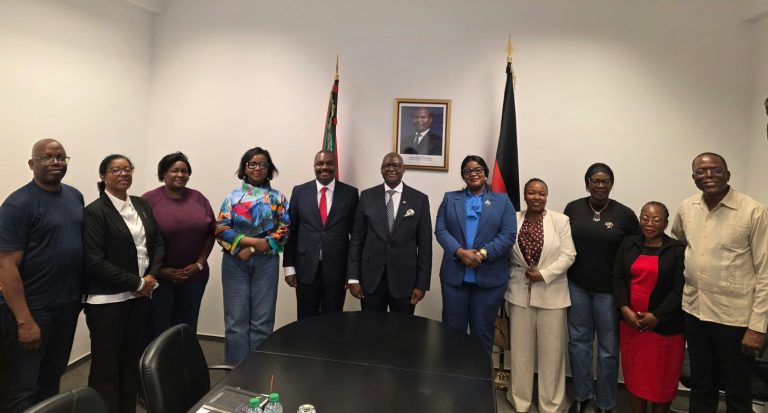
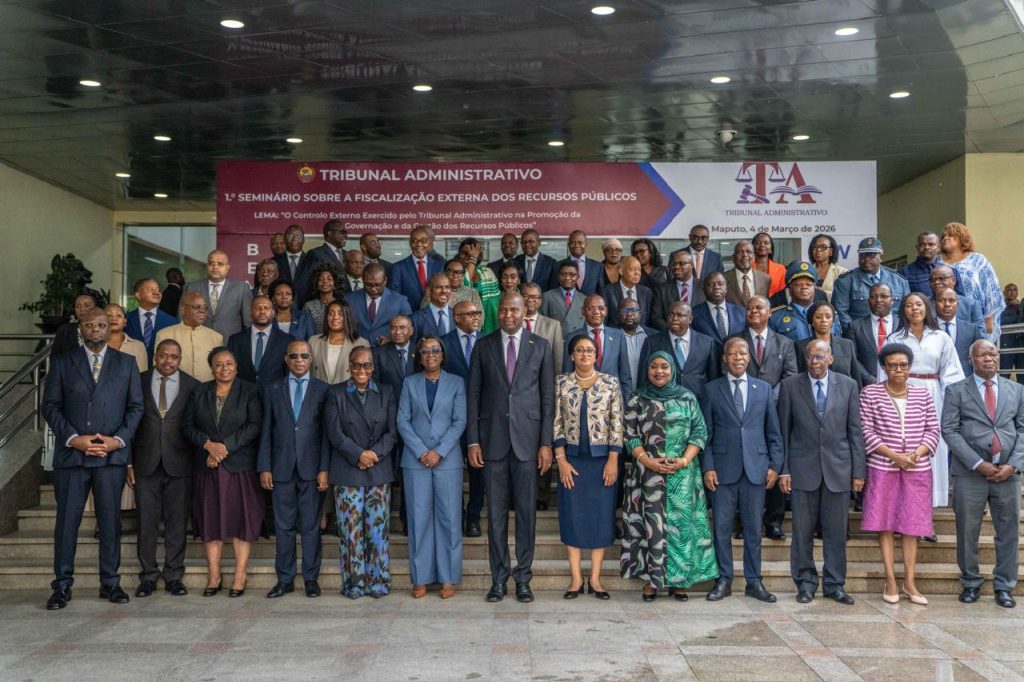
Foto família do Primeiro Seminário sobre a Fiscalização Externa dos Recursos do Estado para Gestores Públicos
Maputo, 5 MAR (AIM) – Ana Maria Gemo, chairperson of the Administrative Tribunal (AT), the body responsible for checking the legality of Mozambican public expenditure, has challenged the country’s public managers to ensure legality and transparency in their work in order to win the trust of the most vulnerable citizens.
Speaking on Wednesday, in Maputo, at the opening of the First Seminar on External Oversight of State Resources for Public Managers, Gemo advocated a full understanding of external control mechanisms and the strengthening of accountability in public management.
According to Gemo, the Administrative Tribunal performs a function of high constitutional and legal relevance, overseeing the legality and budgetary coverage of acts subject to its jurisdiction, as well as the use of financial resources obtained abroad, including loans, subsidies, guarantees and grants.
“In exercising these powers, we carry out external control with independence and impartiality, ensuring that the collection and use of public resources respect the law, budgetary principles and the rules of good financial management”, she said.
According to Gemo, the proposed creation of the Tribunal of Auditors and the Supreme Administrative Tribunal is a fundamental step in strengthening external control and the uniformity of administrative justice.
“These tribunals will allow for a concentration of efforts on the external control of public resources, guaranteeing greater capacity for financial evaluation and reinforced organizational and functional autonomy. They will also contribute to the consolidation of the uniformity of jurisprudence, ensuring greater coherence and effectiveness in the application of the law,” she said.
Reiterating the commitment to public ethics and institutional integrity, Gemo said “the rectitude of the conduct of magistrates and officials is fundamental.”
She also highlighted the importance of effective policies for prevention, response, and resilience in the face of climate change.
“It is imperative to ensure that the mobilized resources reach the populations that need them most, and with speed, whether in the preventive aspect, in the immediate response, or in the post-calamity and natural disaster reconstruction phase”, she said.
(AIM)
NL/Ad/pf (336)