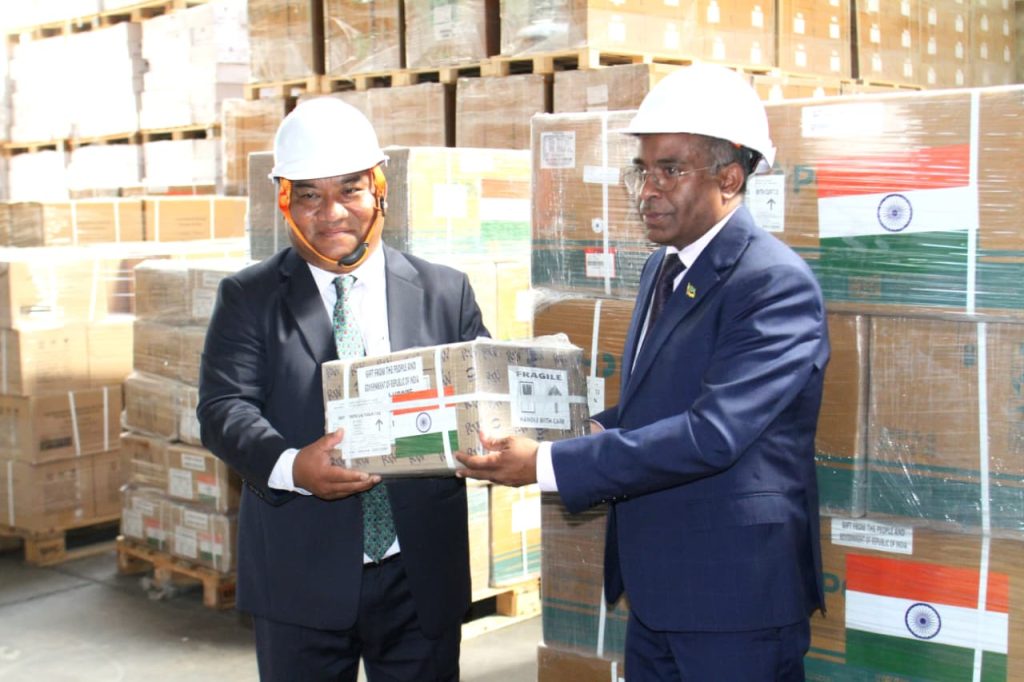
Ministro da Saúde, Ussene Isse (direita), recebe donativo de medicamentos do Alto-comissário da Índia em Moçambique, Robert Shetkintong
Maputo, 24 Mar (AIM) – The Mozambican health authorities have guaranteed that there is no interruption in medicine supply in the country.
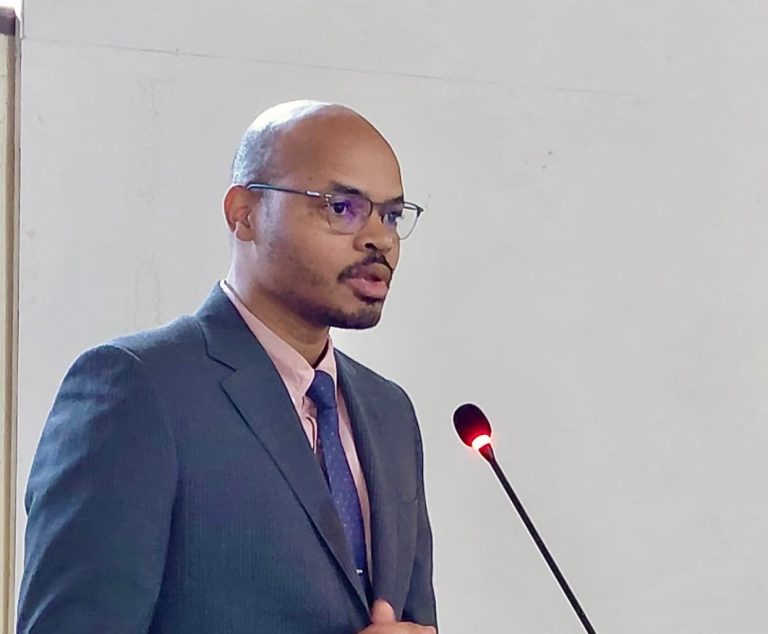
According to the Health Minister, Ussene Isse, speaking on Monday, in Maputo, on the sidelines of a ceremony in which he was receiving medicines donated by the Indian government, the previous reference to 12- to 18-month time frames in the acquisition of medicine did not mean that the country would be without medicines during this period.
“The medicine has to be produced, inspected, evaluated. It can’t simply arrive. These are international procedures that have to be followed,” he said.
The minister pointed to external dependence as one of the main challenges in the sector, calling for local production of medicines
“If we had pharmaceutical factories in Mozambique, there wouldn’t be this impasse”, he said. “We have been advising entrepreneurs to invest in the production of medicines inside the country”.
According to Isse, “when we talk about the process, it doesn’t mean standing still while people die. It’s the cycle, but the medicines are arriving and we are working.”
The minister revealed that the country has maintained stability in the supply of medicines for priority diseases, such as malaria, tuberculosis, and HIV/AIDS, thanks to the support of international partners.
“From the point of view of malaria, tuberculosis, and HIV, we have been receiving medicines from the Global Fund. The country is stable, there are no problems in relation to this situation”, he said.
However, he acknowledged limitations in some specific areas, which are being managed based on priority criteria.
“We are somewhat concerned about antibiotics, medicines for cancer, drugs to treat high blood pressure and diabetes. We have restrictions and we are managing as administrators, concerned about the health of the people”, he said.
According to the Minister, the priority has been to guarantee care in emergency cases, avoiding loss of life due to lack of assistance.
“In a crisis situation, we have to ensure that nothing is lost in the emergency room, that no one dies due to lack of medication. Those who need rapid intervention to save their lives are admitted immediately and treated”, he said.
Isse also warned about an early increase in influenza cases. “We are experiencing a period of increased flu cases”, he said. “This year it started earlier. We have to reinforce hygiene measures, wear masks in crowded places, and quickly seek the nearest health unit at the first sign of respiratory symptoms.”
The minister added that, although the situation is under control, prevention remains fundamental, especially for more vulnerable groups.
(AIM)
SN/Ad/pf (436)