Maputo, 10 Jun (AIM) – Mozambican President Daniel Chapo has reaffirmed that the fight against corruption and money laundering remains a national priority so that the country may attract foreign capital to strengthen its macroeconomic stability.
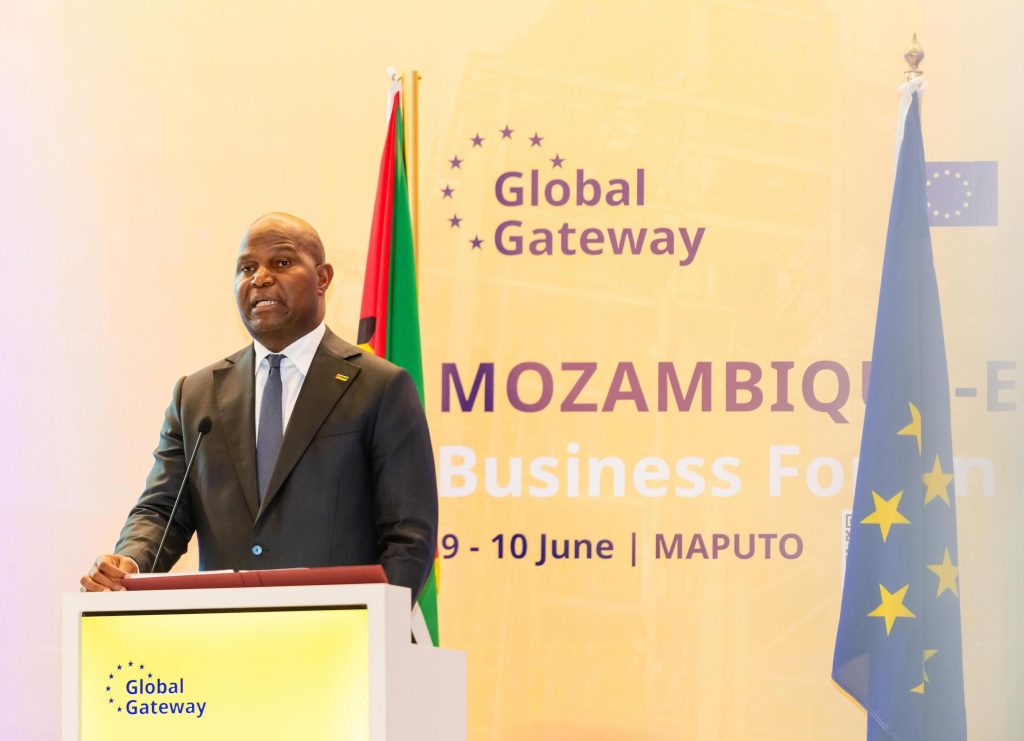
Speaking at the opening of the II Mozambique-European Union Business Forum (Business Forum 2026), held in Maputo, on Thursday, as part of the Global Gateway initiative, Chapo said that the fight against all types of crime creates favorable conditions for attracting foreign capital.
The President explained that the government is committed to consolidating a safe, transparent, and competitive business environment by fighting “corruption, kidnapping, money laundering, and other related crimes.”
“We want a country at peace, with security and with an attractive business environment for national and foreign investors. We intend to mobilize more private investment, both national and foreign, for the strategic sectors of the Mozambican economy”, he said.
The President also said that Mozambique’s removal from the Financial Action Task Force’s (FATF) grey list is one of the positive signs for the markets and “gas projects should significantly boost the national economy.”
Since 2025, the President said, the government has been implementing a set of structural reforms based on three fundamental pillars: macroeconomic stability, consolidation of public finances, and fiscal reforms.
The reforms include the revision of the customs tariff, Value Added Tax (VAT), and Corporate Income Tax (CIT), with the aim of ensuring greater predictability and security for investors.
“The government introduced significant improvements in VAT management through the digitization of processes, the strengthening of monitoring mechanisms, and the definition of clearer and faster procedures”, the President said.
Chapo also highlighted the creation of the Development Bank and the Mutual Guarantee Fund, instruments designed to facilitate access to credit, reduce financing costs, and support the growth of small and medium-sized enterprises.
“The central objective of the reforms is to reduce contextual costs, increase administrative efficiency, and ensure greater regulatory predictability, while simultaneously reinforcing transparency in public procurement through the State Procurement Center”, he said.
For his part, Gonçalo Matias, Deputy Minister for State Reform of Portugal and representative of the European Union (EU), said that the dynamic and competitiveness of private sector is indispensable for deepening economic relations between the EU and Mozambique.
“Entrepreneurship and innovation are essential drivers of prosperity and job creation. The EU will continue to support sustainable and inclusive investments. The cooperation between the EU and Mozambique goes beyond the economic dimension, includes areas such as security, social development, and humanitarian aid”, he said.
(AIM)
MR/Am/