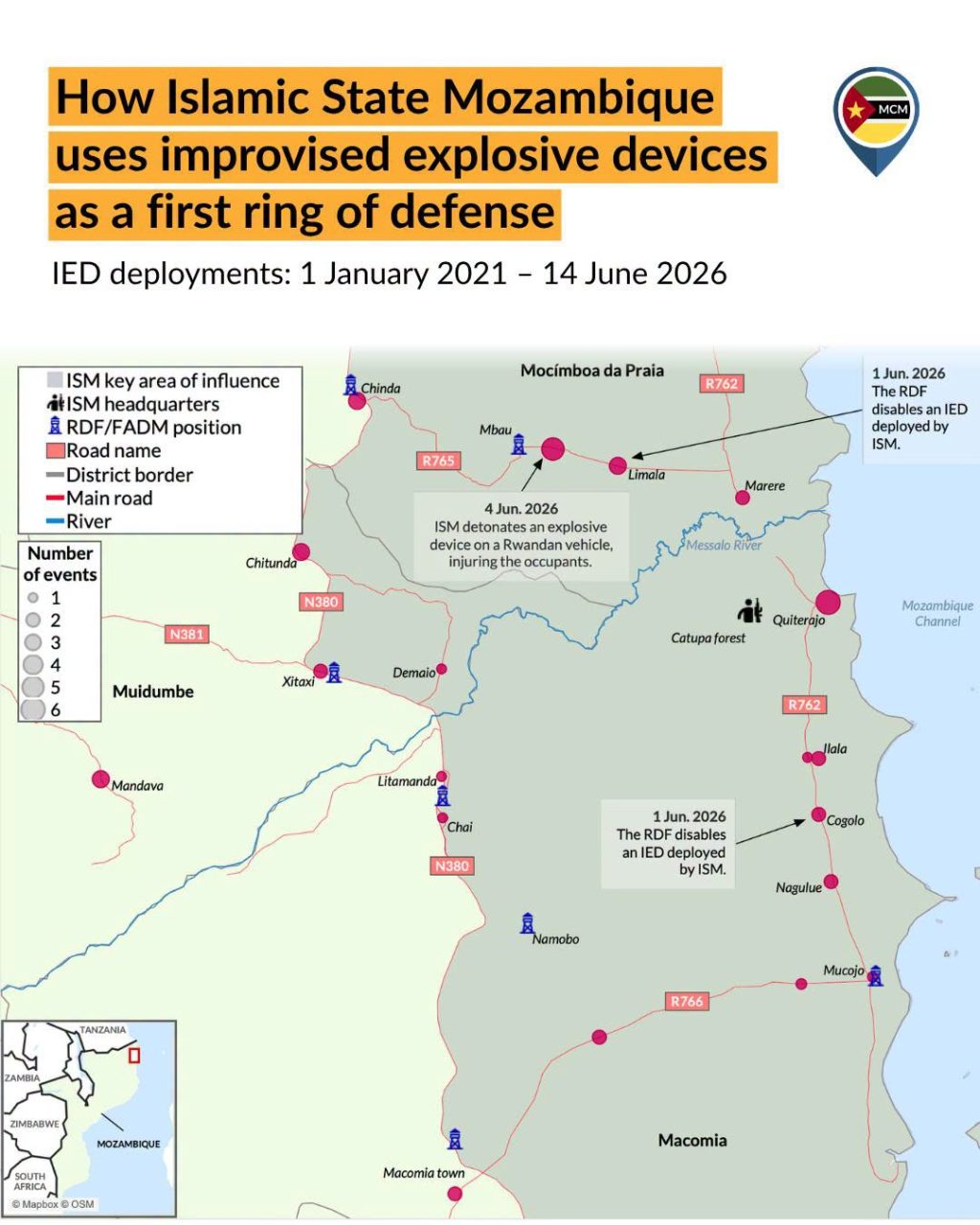
Maputo, 23 Jun (AIM) – The Islamist terrorists that have been carrying out attacks against the districts of the northern Mozambican province of Cabo Delgado have been resorting to improvised explosive devices (IEDs) as a central element of their defense strategy.
In a report, the independent conflict registration project ACLED (Armed Conflict Location and Event Data Project) revealed that the most recent use of IEDs by terrorists was between June 1st and 4th.
“ACLED first records ISM deploying an IED in 2021. Since then, ACLED records 45 IED incidents involving Islamic State Mozambique (ISM), of which 35 have been in Macomia and Mocímboa da Praia districts. Most deployments have been on roads that surround the Catupa forest, with the purpose of constraining the movement of FADM and Rwandan forces and discouraging approaches to ISM’s main camp”, reads the report.
“The ISM deployed the three IEDs between 1 and 4 June, but the forces identified and destroyed two. However, the impact of a successful IED deployment is much greater. This is seen first in the injury to soldiers in the vehicle struck, but also in the cost of recovery operations in the wake of such an attack”, adds the document.
Since 2021, ACLED recorded eight IEDs incidents on that stretch of road and “this is not surprising, given the conditions on the ground, with vehicles traveling on a poor road, with heavy vegetation on either side, and numerous turns are particularly vulnerable to attack.”
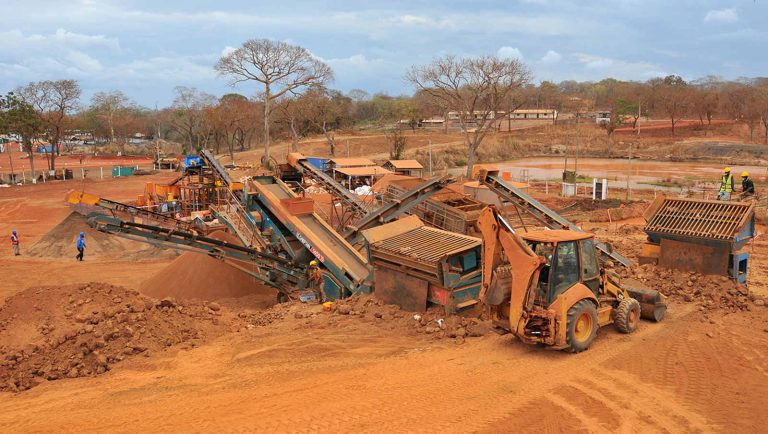
According to the organization, after two months in southern Cabo Delgado, ISM has begun to return to bases in Macomia. “They are likely a little richer, having passed through four informal mine sites during their time in the south. ISM also remained active in the north, deploying IEDs in Macomia and Mocímboa da Praia district and clashing with a Mozambican navy vessel”, reads the report.
“A clash between miners and police at the Namanhumbir ruby mines was a reminder that beyond the insurgency, natural resources remain contentious”, adds the document.
According to the organization, the terrorists, during their time in southern Cabo Delgado, “were a threat to at least two large-scale commercial mining sites and upended the lives of over 21,000 people now living in displaced people’s centers in Ancuabe, Chiúre, and Montepuez districts.”
Am/