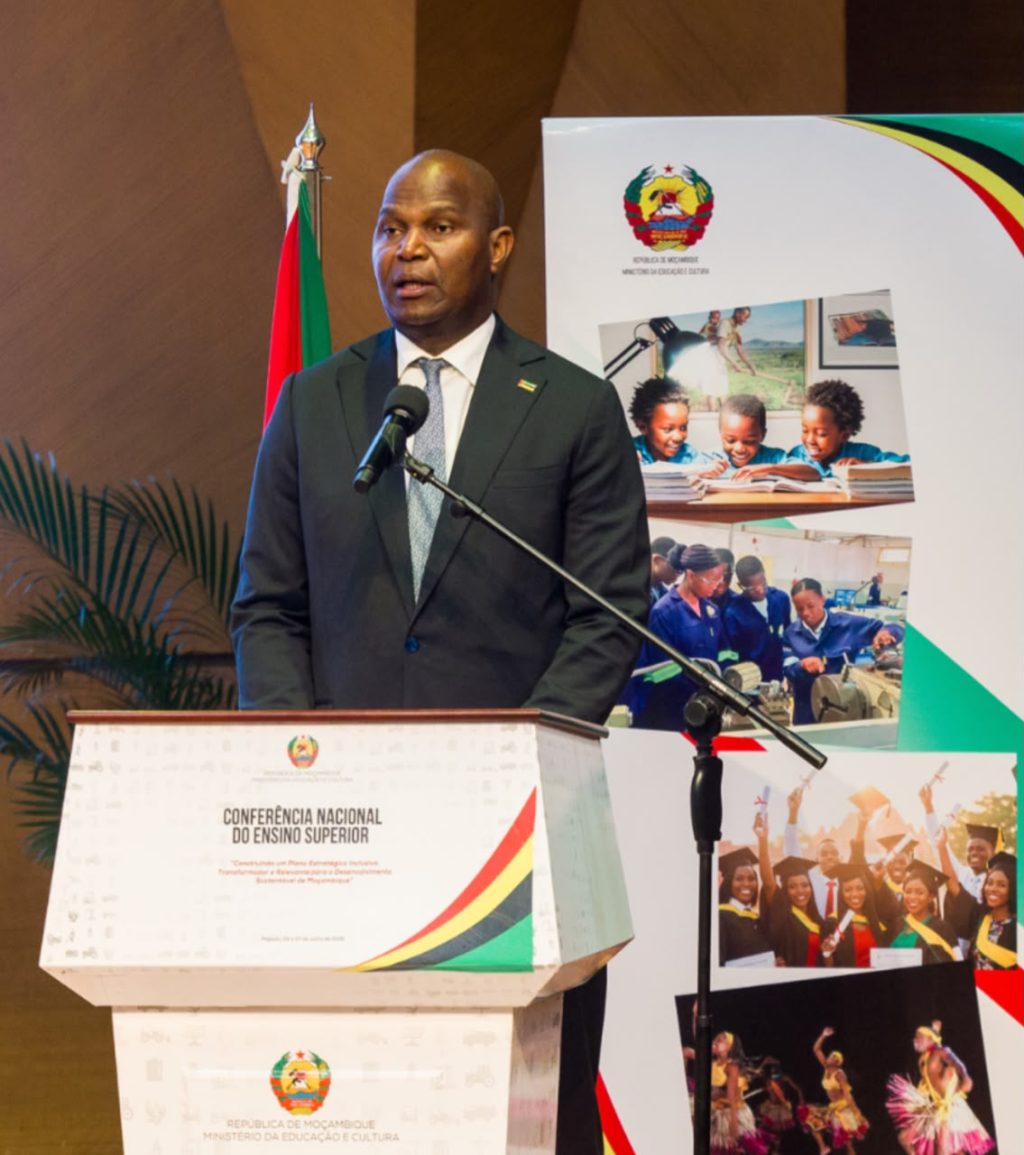
Maputo, 7 Jul (AIM) – Mozambican President Daniel Chapo has encouraged school managers to adopt functional strategies so that higher education can respond to the country’s economic challenges.
According to Chapo, who was speaking on Monday, in Maputo, at the opening of the National Higher Education Conference, a country’s development depends not only on building physical infrastructure but also on the capacity to train qualified professionals, generate innovation, and transform resources into prosperity.
“Higher education must be seen as one of the strategic infrastructures of a modern state. Mozambique faces the challenge of consolidating economic independence through the structural transformation of the economy, which requires a higher education system that is stronger, inclusive, and aligned with national priorities”, he said.
According to the President, new strategies must ensure equal opportunities regarding access, retention, and academic success, as well as strengthen scientific output across all regions of the country. “This meeting must build consensus around the 2027-2036 Higher Education Strategic Plan, involving the government, academic institutions, the scientific community, the private sector, students, and development partners”, he said.
He also emphasized the need to bring universities closer to communities by producing knowledge aimed at solving concrete problems, such as increasing agricultural production, strengthening small and medium-sized enterprises, addressing climate change, and improving public services.
“The country continues to face challenges, including the mismatch between training and the labor market, weak links between higher education institutions and the productive sector, limited applied research, regional inequalities, and quality requirements”, he said.
He therefore advocated for a paradigm shift that transforms universities into centers for generating solutions to national development challenges. He also expressed the ambition to create centers of excellence in different regions of the country, dedicated to applied research in the agricultural, mining, energy, maritime, and logistics sectors.
Chapo explained the current challenge lies in expanding higher education while ensuring quality, relevance, and economic and social impact, “although Mozambique has gone from having a single higher education institution in 1975 to 61 today, while the student population has grown from just over 100,000 in 2010 to more than 270,000”, he said.
For her part, the Minister of Education, Samaria Tovela, said that the conference must identify priorities for strengthening the role of higher education in national development, with a focus on inclusion, equity, quality, and relevance.
(AIM)
SNN/Am/