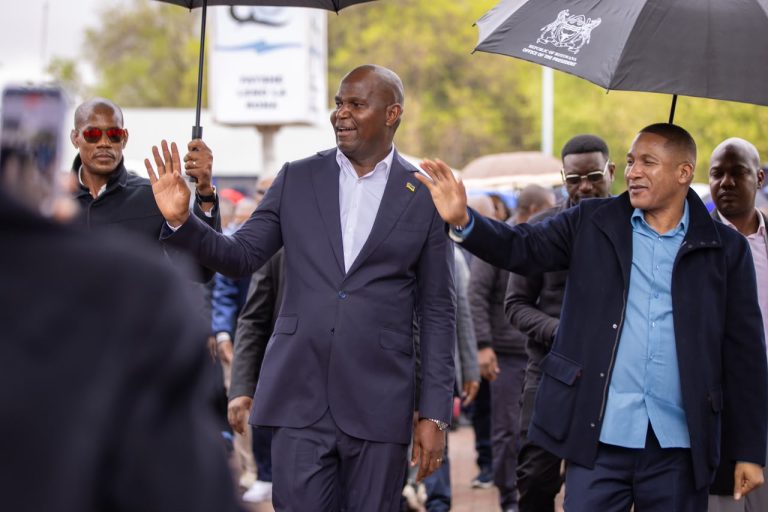
Maputo, 17 Aug (AIM) – Venancio Mondlane, former presidential candidate and leader of the National Alliance for a Free and Autonomous Mozambique (Anamola), accuses the Mozambican Police (PRM) of eliminating those who think differently.
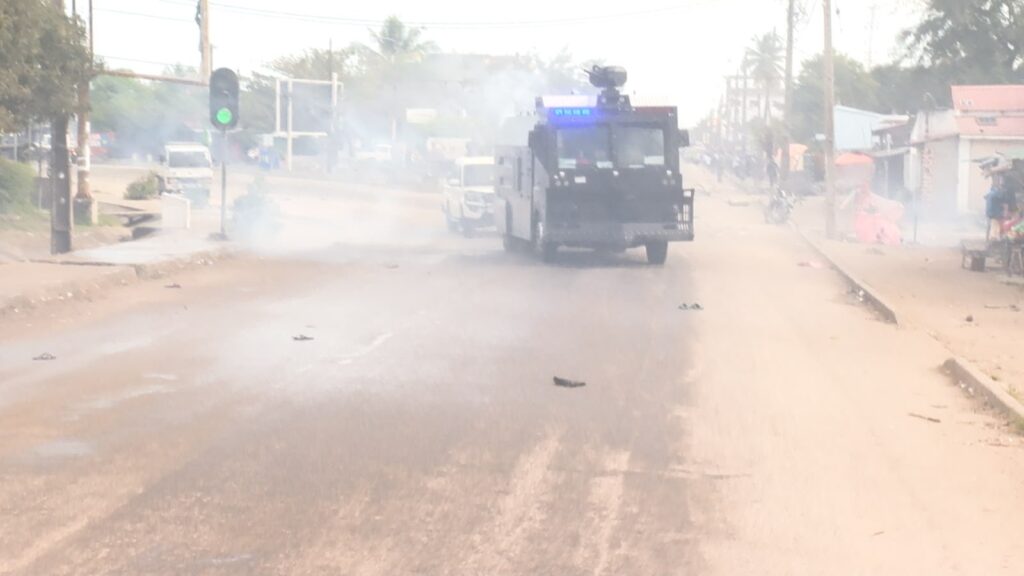
Mondlane’s statement emerged after police officers used tear gas to disperse members of Anamola, during a march marking the party’s first anniversary, in Quelimane city, central province of Zambézia.
Anamola’s supporters had gathered at the venue, awaiting instructions from Mondlane. But suddenly police officers were deployed along major access roads in Quelimane, which indicated a coordinated operation to prevent the marchers from moving through the city streets.
Tensions escalated when police officers fired tear gas canisters into the crowd, causing widespread panic and dispersing the gathering. Numerous participants suffered from gas inhalation. The incident occurred just meters from where a rally was taking place, near a local health facility, raising safety concerns among attendees.
“Our people who are falling are dying because of the methods used by the UIR [the riot force]. They are exposing that they are the ones eliminating those who think differently”, Mondlane said, addressing the crowd during the party’s anniversary event.
This is another aggression against those who support Mondlane. In response to the violence, he announced a national campaign aimed at raising public awareness to” stop persecution, killings, and acts of political violence directed at Anamola members.”
Mondlane also reiterated his call for a comprehensive “Inclusive National Dialogue” to resolve Mozambique’s political and social crisis.
He recalled that “the Inclusive National Dialogue came from a 20-point letter I wrote when was was outside the country. We are offering the solution, even if they don’t include us at the table.”
The agreement on the “Inclusive National Dialogue” was signed last March by Mozambican President Daniel Chapo and nine political parties. Most of the parties that signed the initial document are tiny and politically irrelevant. Mondlane, who was runner up in the 2024 presidential election, was not involved in those discussions, and his political party, Anamola, had not yet been formed.
But once Anamola had been set up, Mondlane expressed its interest in taking part. Judging by the massive attendance at his rallies all over the country, Mondlane is easily the most popular opposition figure in the country. If he and Anamola are excluded from the dialogue, its results are unlikely to be taken seriously.
(AIM)
Zt/Am/