Maputo, 02 Sep (AIM) – Mozambican President Daniel Chapo has reversed the appointment of Waldemar de Sousa as the new governor of the Bank of Mozambique, the country’s regulator of the national financial system.
In his place, in less than 24 hours, he decided to appoint economist Felisberto Dinis Navalha as governor of the country’s Central Bank and Benedita Maria Guimino as deputy governor. In the previous presidential decree, Navalha had been appointed deputy governor. Navalha replaces Rogério Zandamela, who led the Central Bank for 10 years.
“Before the two appointments referred to above, the President revoked, due to subsequent circumstances, the two equivalent instruments through which he had appointed Waldemar Fernando de Sousa as Governor of the Bank of Mozambique, and Felisberto Dinis Navalha as Deputy Governor of the same institution”, reads a statement.
President Chapo may have backed down from his decision following public criticism because De Sousa’s is accused by the Attorney General’s Office (PGR) of being involved in Mozambique’s largest ever financial scandal, known as the case of the “hidden debts.”
De Sousa faces allegations of involvement in facilitating and irregularly contracting external debt totaling approximately two billion US dollars without the required parliamentary authorization.
When the “hidden debts” occurred, De Sousa was one of the Bank’s administrators. He was accused alongside Ernesto Gove (former governor) and Joana Matsombe, also a former administrator. However, he was not tried in the main case, in which 19 defendants were convicted.
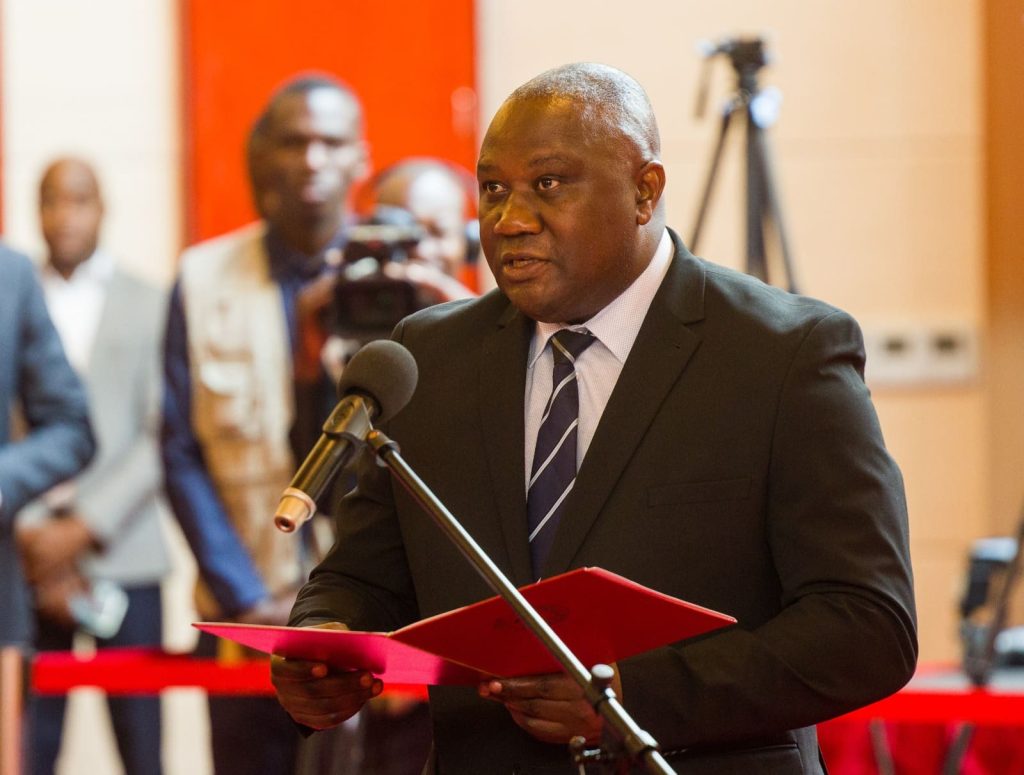
According to President Chapo, who was speaking on Wednesday, in Maputo, at a ceremony in which he swore into office Felisberto Navalha as governor of the country’s Central Bank, the regulator of the national financial system must preserve the country’s macroeconomic and financial stability “while ensuring that the benefits of this stability translate into increased financing for the real economy, production, employment, and development.”
Chapo also challenged Navalha to translate economic stability into increased financing production, employment, and development.
“Low and stable inflation is crucial for protecting the purchasing power of Mozambicans, particularly those with lower incomes. There is a need to improve the functioning of the foreign exchange market, taking into account the difficulties economic agents face in accessing foreign currency to finance raw materials, equipment, and other operations”, he said.
Chapo also said that increasing reliance on the domestic market to finance the State’s needs must be approached with caution, as it could put pressure on interest rates and liquidity, and reduce the resources available to finance the productive sector.
Am/