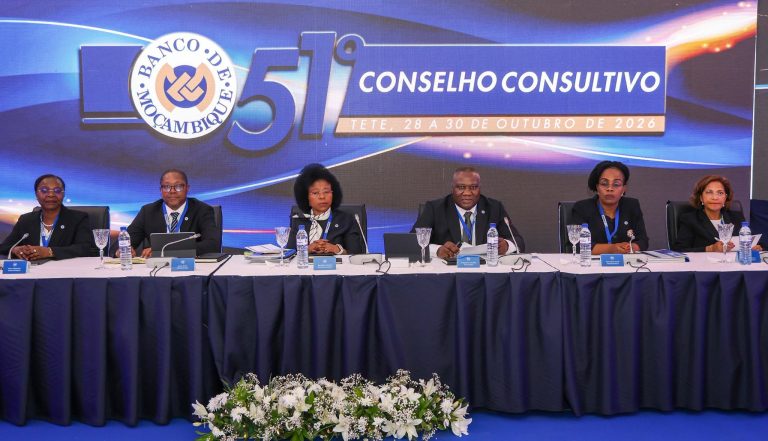
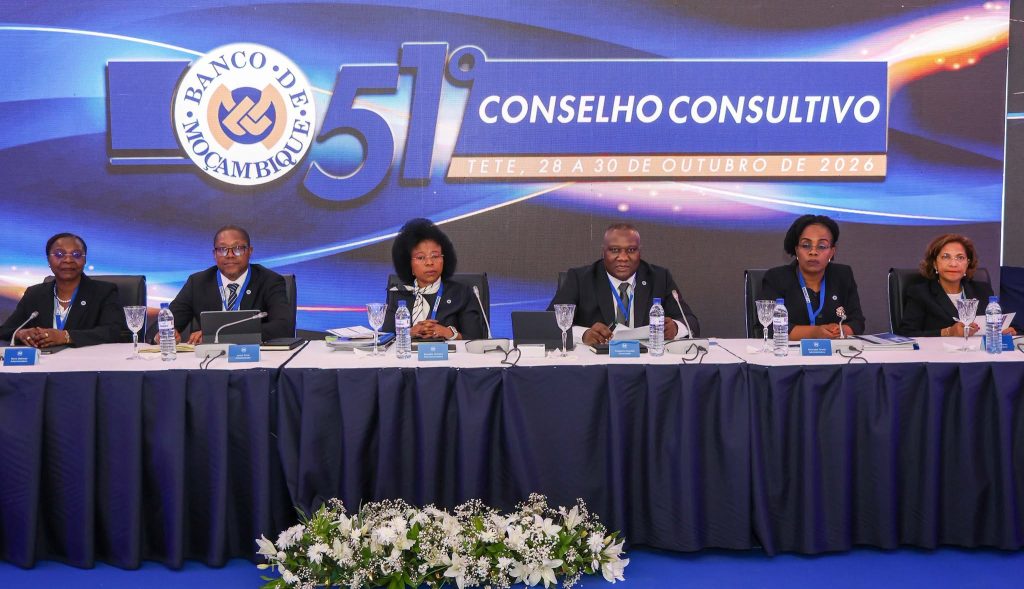
Maputo, 29 Oct (AIM) – The Bank of Mozambique, in its role as regulator of the national financial system, has warned that the growth of the economy remains insufficient to improve the population’s living conditions despite its moderate recovery.
According to Felisberto Navalha, Bank of Mozambique governor, speaking at the opening of the 51st meeting of the Central Bank’s Consultative Council, which is taking place in the central province of Tete, following the contraction of 0.2 percent recorded in 2025, the Mozambican economy grew by 1.7 percent in the second quarter of 2026.
Navalha explained that economic recovery is taking place against a backdrop of inflationary pressures, credit constraints and high levels of public debt.
“This recovery took place in an adverse external environment, the geopolitical tensions in the Middle East and the resulting increase in international prices for fuel, food, transport and logistics. With regard to our country’s macroeconomic performance, it is important to highlight that our economy continues to grow at a moderate pace, which is nevertheless still insufficient to bring about an improvement in the population’s living conditions”, he said.
The governor explained that the bank decided to halt the f reductions in the benchmark interest rate, known as the MIMO rate, at 9.25 per cent, and “We have maintained a prudent monetary policy stance.”
The governor said that the continued increase in public debt and the accumulation of government arrears contribute to greater rigidity in market interest.
Annual inflation, which accelerated from 4.41 percent in April to 7.51 percent in June following fuel price adjustments, subsequently slowed to 6.31 percent in September.
According to Felisberto Navalha, in September the commercial banks had a solvency ratio of 29 percent and a liquidity ratio of 55.5 percent, both above the regulatory minimums, while non-performing loans remained close to 7 percent.
“It means that economic recovery would continue in 2027, but at a moderate pace, driven by the performance of agriculture, the extractive industry and services. There are also domestic and external risks, including developments in public debt, government arrears, and climate shocks associated with the El Niño phenomenon, and international geopolitical tensions”, he said.
Am/