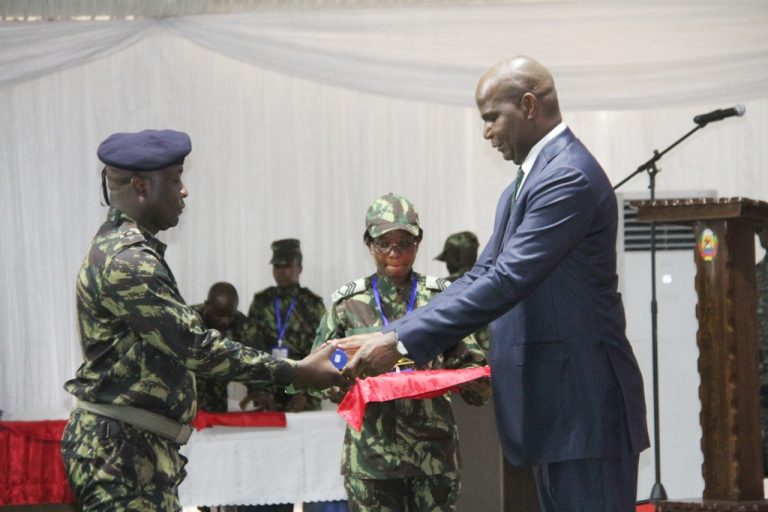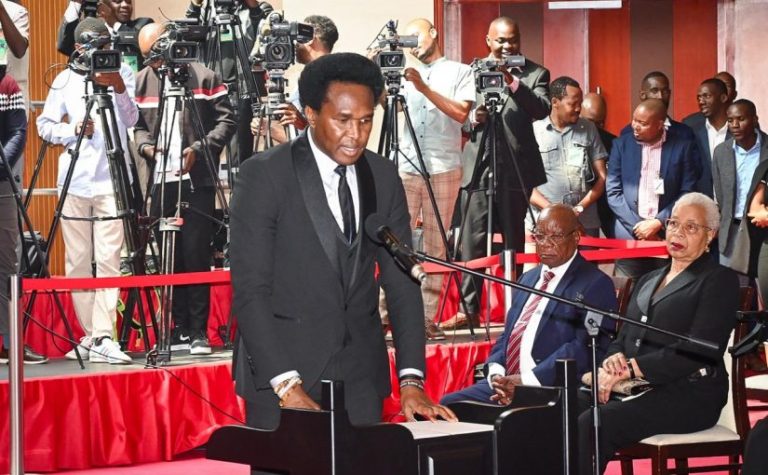

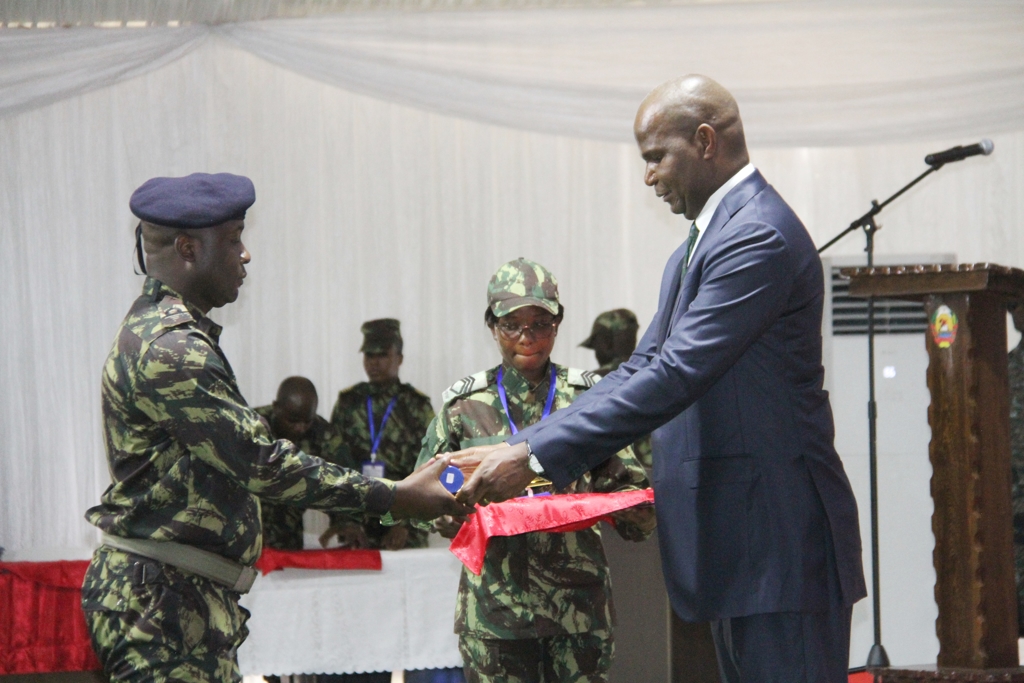
Presidente Daniel Chapo na cerimonia de encerramento dos Cursos de Defesa Nacional, Altos Comandos, Promocao a Oficial Superior e Adequacao em Planeamento Tactico-Operacional. Foto de Ferhat Momade.
Maputo, 17 Nov (AIM) – Mozambican President Daniel Chapo has challenged the country’s military higher education institutions to strengthen scientific research and technological innovation, with a view to developing military prototypes and supporting the establishment of a national defence industry.
Speaking on Monday in Matola, at the closing ceremony of four courses at the Higher Institute of Defence Studies (ISEDEF) Lieutenant-General Armando Guebuza, Chapo called for the creation of a research and technological innovation centre to advise the government on the development of the defence industry.
Chapo urged the institution to explore the development of military technologies, including drones, anti-drone systems, unmanned ground vehicles, precision weapons, geospatial intelligence systems and cyber defence
Referring to the conflicts involving Russia and Ukraine, as well as the United States and Iran, the President said that modern warfare increasingly relies on technological systems, particularly drones and unmanned ground vehicles, rather than the movement of troops.
He also argued that ISEDEF should play an active role in generating scientific knowledge and developing technological solutions suited to the country’s needs, rather than merely transmitting theories and knowledge produced abroad.
Chapo extended the challenge to other military and paramilitary higher education institutions, saying that research and innovation should contribute to strengthening national defence and security capabilities.
Chapo also urged the ISEDEF command to prioritize the quality of training over the number of graduates, so that its courses could compete with those offered by other military education institutions at national, regional, continental and international levels.
The President challenged lecturers and researchers to deepen their studies into emerging threats to national security, including organized and transnational crime, particularly human trafficking, drug trafficking, money laundering and kidnapping.
Chapo stressed that academic activity should produce practical responses to the country’s challenges through research aimed at developing home-grown solutions.
Chapo called on the Ministry of Defence to explore alternative financing mechanisms for acquiring equipment for the Defence and Security Forces, given the high cost of military hardware, rather than relying exclusively on the State Budget.
(AIM)
Zt/Am/