Assembleia da República
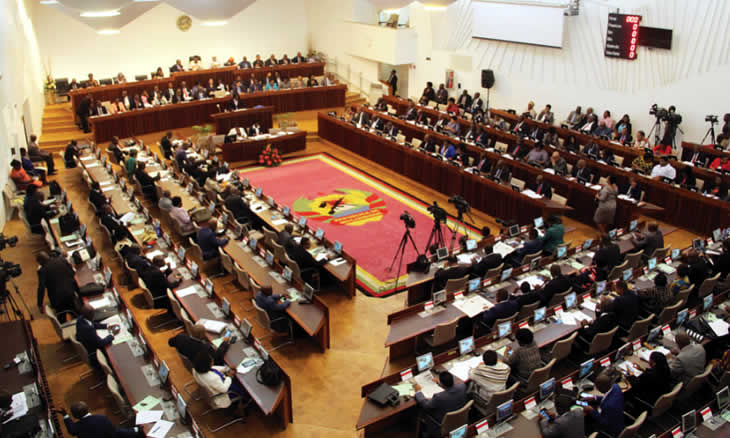
Maputo, 12 Dec (AIM) – All parliamentary deputies from opposition parties on Friday boycotted the Mozambican parliament, the Assembly of the Republic, on the grounds that the government had not granted enough time for them to study a package of alterations to the tax codes that it had submitted.
Boycotting the Assembly is a time-worn tactic of the former rebel movement Renamo, and this time the Renamo deputies were joined by deputies of the Optimistic Party for the Development of Mozambique (Podemos) and the Mozambique Democratic Movement (MDM).
The boycott could make no difference, since the overwhelming majority enjoyed by the ruling Frelimo Party, meant that it had enough votes to pass the legislation on its own.
At a press conference held in response to the opposition boycott, the head of the Frelimo parliamentary group, Feliz Silvia, said the Assembly had already postponed the debate on the tax codes at the opposition’s request.
The debate was originally scheduled for last week but was repeatedly postponed. On Friday, Frelimo was in no mood for any more delays. Silvia added that the tax changes had also been discussed with the main representative of Mozambican business, the Confederation of Mozambican Business Associations.
Most of the work in analysing proposed legislation is not done in the Assembly plenary, but in the parliamentary working commissions, And the three opposition groups did take their seats in the commissions, discussed the proposals there, and signed the opinions from the commissions. It was thus quite untrue for the opposition parties to claim they did not know the content of the proposed changes to the tax codes.
The revised tax codes are needed for the smooth collection of taxes on which the state budget and plan depend. Silvia declared that the legislation will be passed with Frelimo votes, so that the state can continue operating normally.
The changes to the tax codes are nothing dramatic, and the main principles of the Mozambican tax system remain unchanged.
The main bill passed on Friday was on the “Specific Consumption Tax” – this is the tax on damaging goods, such as tobacco products and alcoholic drinks, and on luxury goods (such as perfume, cosmetics and luxury cars).
The tax rates are left unchanged for the next two years. The most significant change is a reduction in the tax paid by electric vehicles and passenger vehicles that carry ten or more people.
(AIM)
Pf/ (402)