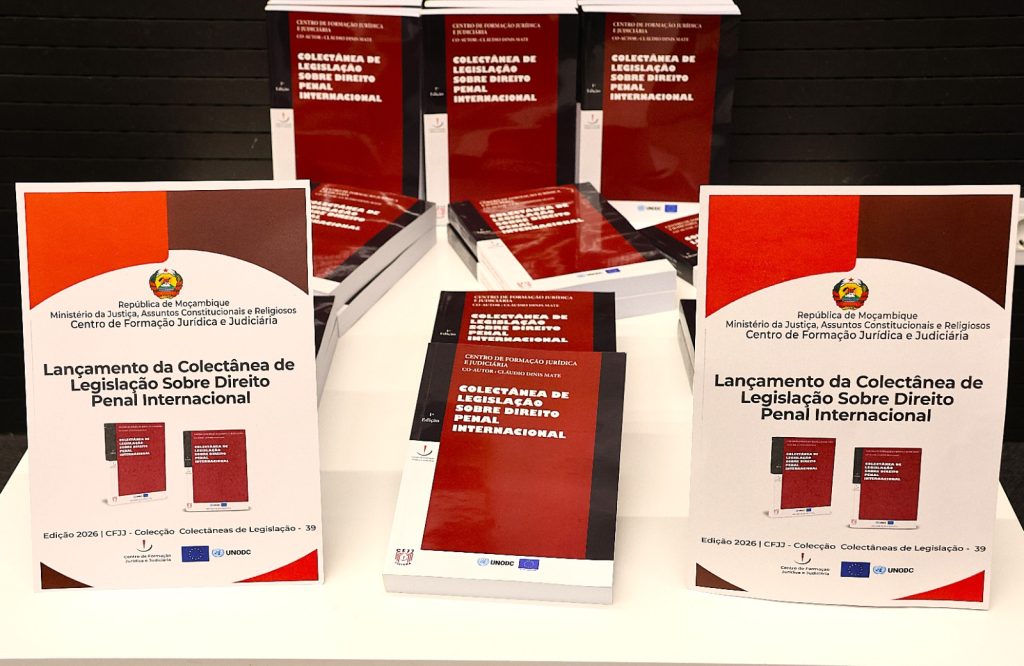
Maputo, 19 May (AIM) – The Mozambican Ministry of Justice, Mateus Saize, on Monday, in Maputo, launched a collection of Legislation on International Criminal Law, which is regarded as strategic instrument for strengthening the fight against transnational organized crime, terrorism, corruption and drug trafficking in the country.
The minister explained that the publication is a relevant milestone in strengthening the Mozambican justice system and consolidating the rule of law, as “it transcends the idea of a simple normative construction.”
According to Saize, given the increasing sophistication of international crime, it is imperative that States adopt legal responses aligned with international commitments to strengthen the system.
The work brings together 27 international legal instruments adopted within the framework of the United Nations, the African Union, and the Southern African Development Community (SADC). It aims to facilitate consultation and practical application of international legal mechanisms by justice operators.
According to United Nations Office on Drugs and Crime (UNODC) representative in Mozambique, António De Vivo, the collection represents another effort to keep criminal justice issues at the top of the “national agenda.”
“More than a normative compendium, it is a collection conceived as a practical working tool intended for justice operators, policymakers, academic researchers, and other relevant stakeholders. The instruments compiled constitute essential references for the prevention and combating of criminal phenomena that transcend borders and challenge national capacities”, he said.
In her part, Michele Crimella, European Union representative, said that the launch of the work reflects “Mozambique’s commitment to justice and international cooperation for the rule of law.”
“The rule of law is under attack in many countries. It is everyone’s duty to protect the systems, institutions, and principles that guarantee the common good and social coexistence. The challenges to justice and security know no borders”, she said.
“Transnational organized crime, human trafficking, and corruption are threats that exploit institutional weaknesses and promote impunity”, she added.
(AIM)
NL/Am/