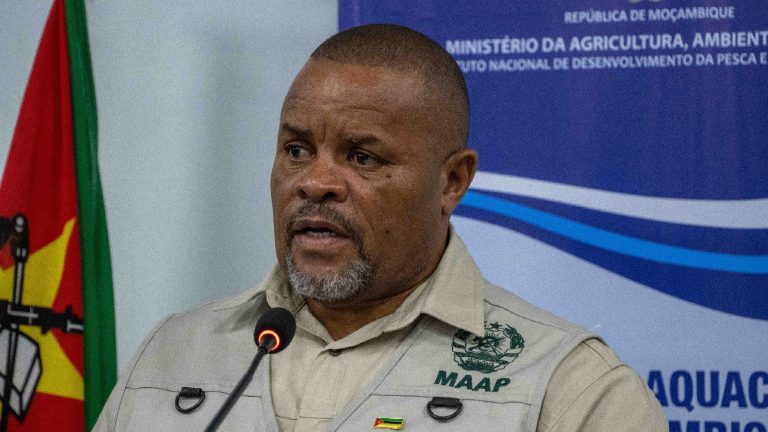

Maputo, 2 Jun (AIM) – The Mozambican minister of agriculture, Roberto Albino, has announced that the government will invest approximately 600,000 US dollars in resuming national production of veterinary vaccines.
According to the minister, who was speaking on Monday at the opening ceremony of the National Animal Health Meeting, which took place in Maputo, under the motto “Strengthening Animal Health to Guarantee Public Health and Food Security”, the measure is crucial to strengthen sanitary sovereignty and reduce dependence on imports in a context of global constraints in the supply of these inputs.
“We forecast an investment of approximately 600,000 dollars for the resumption of production of vaccines against anthrax and symptomatic anthrax, and for the preparation of the production of the Newcastle disease vaccine”, he said.
The minister explained that the decision comes at a time when the international market is facing limitations in the availability of veterinary vaccines, a situation affecting several African countries and exposing the vulnerability of global supply chains.
“The world is facing a global animal health crisis. The availability of vaccines is very limited, and this forces us to strengthen our domestic production capacity. The dependence on imports has hampered the timely response to vaccination campaigns and the control of diseases affecting the national livestock population”, he said.
Albino believes that dependence on external markets compromises animal health and livestock production, which means that “investment in animal health should not be understood as an expense, but rather as a structural investment for the national economy.”
“It is an investment in the economy, in public health, in food security and in the future of the country. The livestock subsector plays a fundamental role in the rural economy, contributing to the generation of income, employment and food security for thousands of Mozambican families”, the minister said.
The commitment to national vaccine production also arises as a response to the need to ensure greater predictability and autonomy of the veterinary system, in a context where the global shortage of vaccines has become increasingly evident.
For her part, Cláudia Pereira, representative of the Food and Agriculture Organization of the United Nations in Mozambique (FAO), said his organization will continue to support strengthening veterinary services and improving national capacities for the prevention and control of animal diseases.
Pereira highlighted that animal health is crucial for food security, public health, and the resilience of agri-food systems, emphasizing the importance of continuous investment in the sector.
She also advocated for strengthening the “One Health” approach, which integrates animal, human, and environmental health, as a response to the growing challenges associated with zoonotic diseases, climate change, and antimicrobial resistance.
(AIM)
SN/Am/