
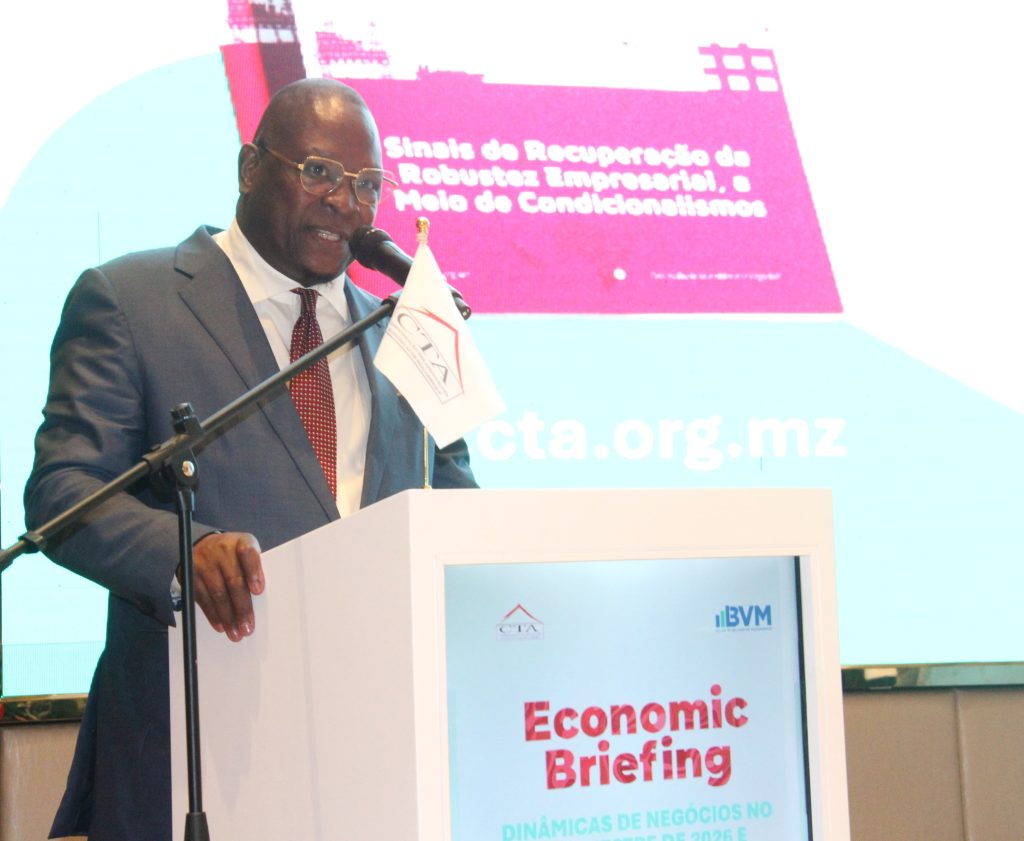
Maputo, 11 Sep (AIM) – Mozambique’s Confederation of Business Associations (CTA) has appointed out to foreign currency shortages (particularly US dollars) and fuel crisis as the main constraints for the business environment during the second quarter of 2026.
According to CTA chairperson, Álvaro Massingue, speaking on Thursday in Maputo, during an Economic Briefing on Business Performance in the Second Quarter of 2026 and Private Sector Outlooks, these factors also affected economic activities, supply chains, and corporate operational capacity.
“These factors also placed pressure on the private sector during the period under review. These factors had a direct impact on economic activities, supply chains, and the operational capacity of companies”, he said.
Despite these constraints, the CTA noted signs of improvement in macroeconomic performance as the macroeconomic environment index rose from 55 percent in the first quarter to 58 percent in the second quarter of 2026, reflecting a slight acceleration in economic activity.
Massingue explained that this trend was accompanied by a slight increase in aggregate demand, a moderate rise in the general price index, and the maintenance of exchange rate stability.
He also noted a favorable trend in market interest rates, which had a positive impact on companies’ access to credit. The Business Robustness Index also showed improvement, rising from 26 to 27 percent during the period under review.
“Although this represents an increase of only one percentage point, the result is significant given the context in which companies are operating, a landscape marked by successive shocks and constraints”, he said.
“We cannot interpret this improvement as a sign that structural problems have been overcome. The first and most immediate issue is the regular supply of fuel. The approximately 46 percent increase in the price of diesel, combined with supply shortages, has had a ripple effect on industry, transport, agriculture, and consumers”, Massingue said.
“An economy cannot grow sustainably when its key factors of production and distribution face constraints”, he added.
Another issue highlighted by Massingue is access to the foreign exchange market, which continues to limit companies’ ability to import raw materials, equipment, fuel, and other essential production inputs. “Without raw materials, there is no production, and exports decline. Furthermore, without production, job continuity is jeopardized,” he said.
In addition to constraints related to fuel and foreign currency, the CTA points to outstanding state debts to the private sector, the deterioration of road infrastructure caused by floods and a lack of maintenance, and bureaucracy as factors that continue to drive up the cost of doing business. Massingue argued that these constraints must be addressed to enable a more consistent recovery of business activity.
MR/Am/


