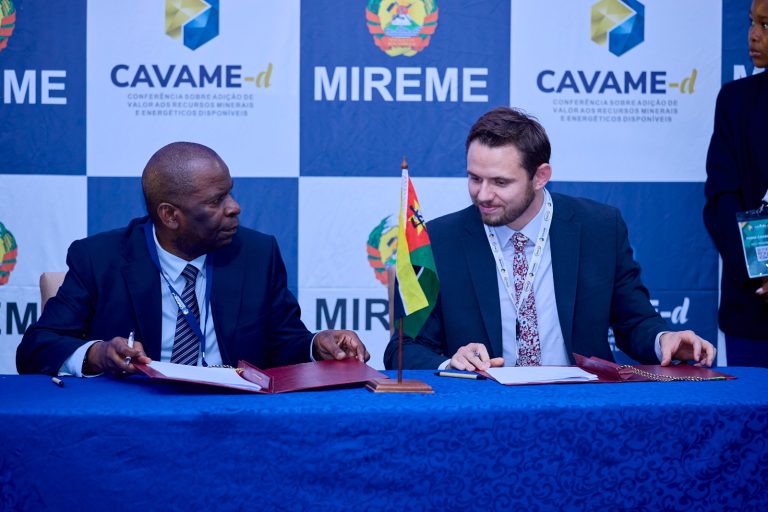

Maputo, 2 Jun (AIM) – The Mozambican Minister of Planning and Development, Salim Valá, has revealed that the resumption of major gas projects in the country is attracting South Korean investment towards economic transformation.
Last January, the construction of the Liquefied Natural Gas Project (Mozambique LNG), headed by the French company TotalEnergies, was resumed after it was interrupted, in 2021, following a major terrorist attack against Palma town, northern province of Cabo Delgado. Mozambique LNG, which is budgeted at about 20 billion US dollars, was resumed as the security conditions have improved.
The Coral Sul FLNG is operated by Eni, representing Mozambique Rovuma Venture (MRV), a consortium which also includes ExxonMobil and the China National Petroleum Corporation (CNPC), and which holds 70 per cent of the shares. The other 30% are held equally by Mozambique’s own National Hydrocarbon Company (ENH), Galp of Portugal and Kogas of South Korea.
South Korean, through Kogas, is a partner in Area 4 of the Rovuma Basin, which is operated by Mozambique Rovuma Venture (MRV), a joint venture between ExxonMobil, the Italian energy company Eni and CNPC of China, which holds a 70 per cent participating interest in the concession contract.
Kogas, the Portuguese company Galp and Mozambique’s own National Hydrocarbon Company (ENH) each hold a 10 per cent stake in Area 4.
According to the minister, speaking at the Korea-Africa Ministerial Meeting, held in Seoul under the motto “Partnership for Joint Responses to Global Challenges”, natural gas is contributing to a new stage in economic relations between Mozambique and South Korea.
Addressing investors and political decision-makers, the Valá highlighted Mozambique as an attractive destination for the South Korean capital, emphasizing factors such as the abundance of natural resources, its strategic location, the youth of its population, and its high potential for economic growth.
“The resumption of the Mozambique LNG project represents a historic opportunity to deepen economic cooperation between Maputo and Seoul. Gas projects should be regarded not only as platforms for exporting liquefied natural gas, but as instruments capable of providing national industrialization”, he said.
The minister believes that gas exploration must stimulate infrastructure development, create new job opportunities, strengthen energy security, and promote the emergence of industries associated with the energy value chain.
In this context, Mozambique intends to attract South Korean companies to sectors such as engineering, logistics, petrochemicals, fertilizers, energy production, shipbuilding, industrial equipment, and specialized services related to natural gas.
This initiative gains relevance considering South Korea’s experience in areas such as heavy engineering, manufacturing, technological innovation, and shipbuilding – sectors considered fundamental to Mozambique’s economic transformation.
In addition to natural gas, Mozambique seeks to attract South Korean investment for the exploration and processing of critical minerals, increasingly sought after in the context of the global energy transition.
“The country has significant reserves of graphite, lithium, titanium, and other strategic minerals used in the production of batteries, electric vehicles, and clean technologies. The government’s objective is to promote the local processing of these resources, increasing the added value generated in the country and stimulating the development of new industries”, he said.
Valá also highlighted South Korea’s development trajectory as a source of inspiration for Mozambique. “In just a few decades, the Asian country has transformed itself from an essentially agricultural economy into a global industrial and technological power. For the Mozambican government, cooperation with Seoul could contribute to accelerating the process of economic modernization through knowledge transfer and technical capacity building”, the minister said.
Among the priority areas of cooperation are the manufacturing industry, energy, infrastructure, digital technologies, engineering, shipbuilding, and technical-professional training.
The Minister also took the opportunity to convey a message of confidence to international investors, highlighting the progress made in stabilizing regions previously affected by security challenges.
“The country has significant reserves of graphite, lithium, titanium, and other strategic minerals used in the production of batteries, electric vehicles, and clean technologies”, he added.
Am/