
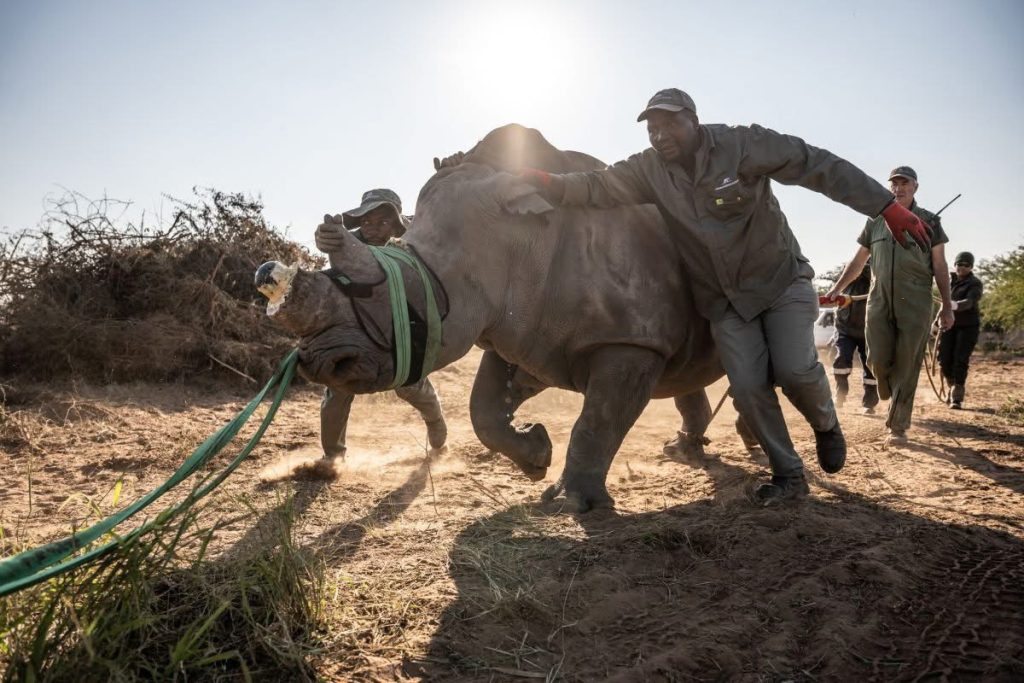
Maputo, 15 Jun – The reception of nine female white rhinos in Zinave National Park (PNZ), in the southern Mozambican province of Inhambane, completes the return of the so-called Big Five (lion, elephant, buffalo, leopard, and rhinos), a historic milestone for the recovery of national biodiversity.
The PNZ is now the only national park in Mozambique where visitors can observe the five most sought-after species by safari tourists. This also positions the country in the African ecotourism market and creates conditions to attract more national and international visitors.
With a more complete tourism offering, the park gains the capacity to generate greater revenue through entrance fees, accommodation, tourist activities, and associated services.
According to António Abacar, PNZ administrator, this milestone opens new perspectives for the economic development of the region “as the arrival of this last group of nine white rhinos represents not only a step forward in the park’s recovery, but also an opportunity to strengthen tourism and create lasting economic benefits.”
“With this relocation, Zinave consolidates itself as the only national park in Mozambique where it is possible to find the Big Five. This achievement increases the park’s attractiveness for tour operators and visitors, creating new opportunities for economic growth”, he said.
He also explained that the achievement is the result of cooperation between different “institutions that are committed to the economic and tourism potential of the conservation area.”
“What we are witnessing today is the result of a strong partnership between the National Administration of Conservation Areas, the Peace Parks Foundation and Exxaro, as a donor, who believe in Zinave’s potential to generate sustainable development through tourism”, the administrator said.
The expected economic impact also extends to local communities. The increased flow of visitors could translate into more direct and indirect jobs, opportunities for small businesses and greater income circulation in the areas surrounding the park.
According to Abacar, the growth of tourism could generate concrete benefits for the populations residing in the surrounding areas. “A park that is more attractive to tourism means more visitors, more jobs, and more revenue. Part of these resources reverts to local communities through benefit-sharing mechanisms, contributing to improving the living conditions of the populations,” he explained.
The National Administration of Conservation Areas (ANAC), responsible for managing the country’s conservation areas, has played a central role in this process, promoting models that reconcile environmental preservation and income generation.
The conservation areas under ANAC’s management occupy approximately 25 percent of the national territory and represent a strategic resource for the development of ecotourism, a sector with high potential to attract investment, create jobs, and diversify the Mozambican economy.
Pc/Am/