
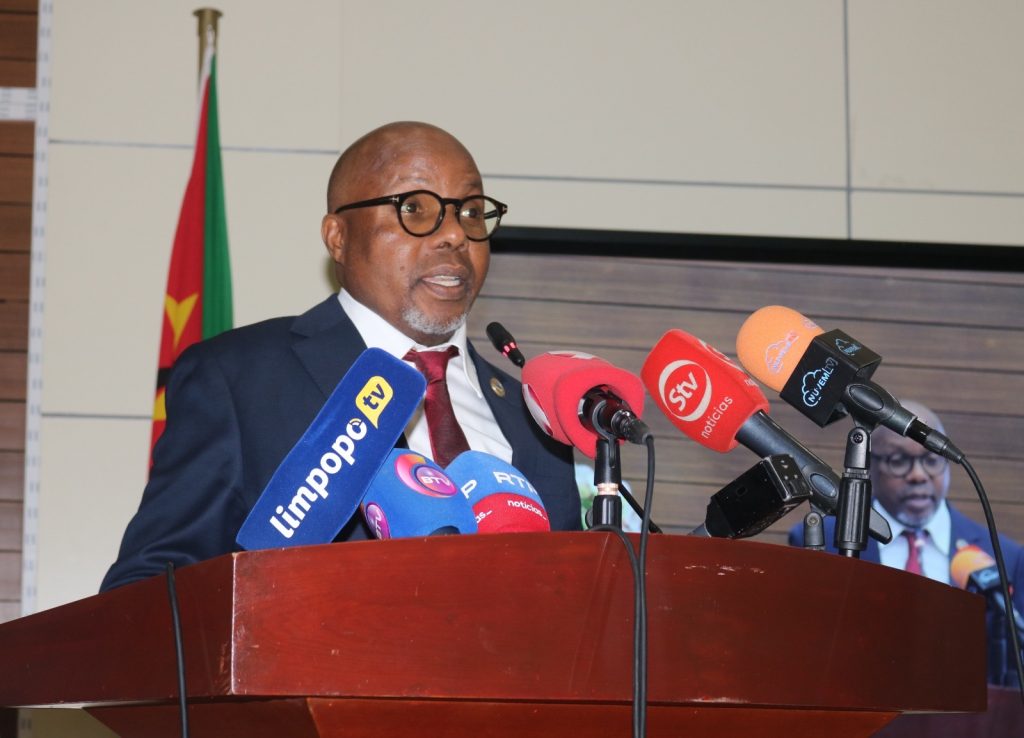
Maputo, 30 Jun (AIM) – Mozambican Minister of Digital Transformation, Américo Muchanga, believes that training experts and modernizing technological infrastructures are crucial measures that the country needs to fight against cybercrime to ensure greater security in cyberspace.
Muchanga was speaking on Monday, in Maputo, at the opening of the 4th Seminar on Crime, held under the theme “For firm action against scams and electronic fraud: investigation, cooperation, and accountability,” organized by the Attorney General’s Office.
Speaking on Monday, in Maputo, at the opening of the 4th Seminar on Crime, held under the motto: “For Firm Action against Scams and Electronic Fraud: Investigation, Cooperation, and Accountability”, the government has been investing in training specialists to strengthen the capabilities of public institutions, modernizing technological infrastructure and promoting a national Cybersecurity culture.
According to the minister, the digital revolution represents an extraordinary opportunity to accelerate economic growth, promote social inclusion, and bring economies closer together in an increasingly interconnected world.
However, he warned that technological advancement also creates new challenges, as cybercrime keeps pace with innovation.
“The arena of this crime is invisible to the naked eye, yet its impacts are very real in the lives of people, companies, and institutions. Every technological advance brings new responsibilities and new challenges,” he said.
“Electronic fraud can compromise a family’s assets, while a cyberattack can disrupt essential services. Digital transformation must continue to be harnessed to boost the economy and bring the State closer to citizens, without neglecting the security of systems and users”, he said.
For his part, Irene Uthui, Deputy Prosecutor General, citing data from the National Institute of Information and Communication Technologies, Mozambique recorded approximately 39,670 cyber incidents in 2025. About 78 percent of these were related to online scams, cybercrimes, and electronic transaction fraud.
According to Uthui, the emergence of new “modus operandi among criminal organizations needs continuous capacity-building for public prosecutors, judges, investigators, lawmakers, and other professionals involved in the administration of justice.”
“In the past, crime was associated with a physical space, involving identifiable witnesses, physical evidence, and a clearly defined jurisdiction. Today, many crimes are committed remotely via global communication networks by actors operating across national borders”, she said.
She added that physical evidence is now complemented by digital traces scattered across multiple jurisdictions and stored in various technological systems, posing new challenges for criminal investigations.
“The magistrate also noted that technological transformations have profoundly altered the way people communicate, work, and conduct financial transactions. In Mozambique, the financing of cybercrime has been on the rise, causing economic losses, undermining public trust in digital platforms, and compromising the security of electronic transactions, all of which demand a coordinated institutional response”, she said.
(AIM)
MR/Am/