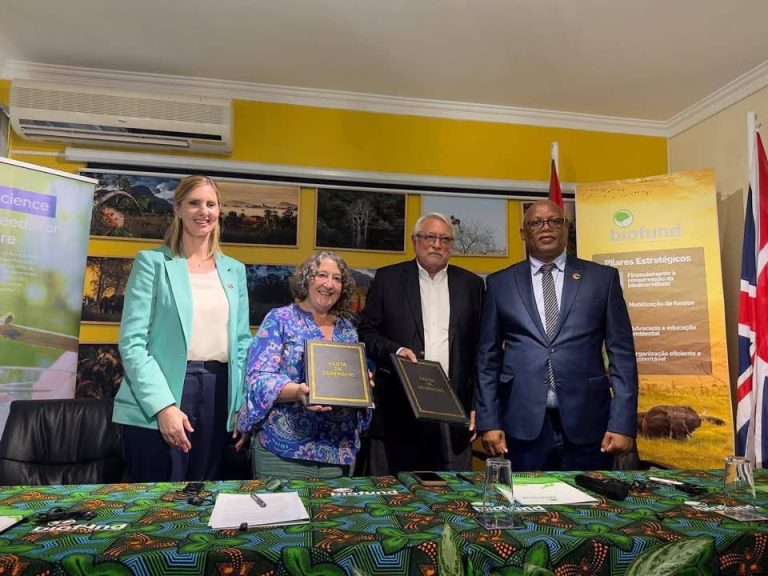

Maputo, 15 Sep (AIM) – The governments of Mozambique and Brazil have signed a Memorandum of Understanding aimed at exchange of experiences and staff training in sectors such as public procurement, payroll management, digital transformation, and administrative modernization.
The agreement was signed on Monday, in Maputo, by the Mozambican Ministry of Finance and the Brazilian Ministry of Management and Innovation in Public Services, as part of the Public Management Cooperation Seminar, which runs until September 18.
Speaking on the occasion, Finance Minister Carla Loveira stated that the partnership represents an opportunity to deepen the experiences already shared between the two countries and to advance to a new stage of bilateral cooperation.
“More than just the signing of a Memorandum of Understanding, this mission by the Brazilian delegation marks the start of its implementation, with the materialization of training activities that will begin immediately”, the minister said.
Loveira explained that this initiative aligns with Mozambique’s transformation agenda, specifically the simplification of procedures and the progressive digitalization of public services, aiming to make public administration more transparent, predictable, and innovative”, she said.
For his part, Cilair Rodrigues de Abreu, Executive Secretary of Brazil’s Ministry of Management and Innovation in Public Services, advocated for building states better capable of meeting citizens’ needs, rejecting the notion that “current discussions should focus solely on the size of the state.”
“The contemporary debate is not about having more or less State. It is about having a more capable State. A State that can transform public resources into concrete results for the population,” he stated.
He also explained that the Brazilian experience rests on three main pillars: people, organizations, and technology, noting that digital transformation must go beyond the mere computerization of processes.
“It is not just about digitizing processes. It is about building a government capable of better understanding people’s needs and responding to them in a simpler, faster, and more effective way”, he said.
He added that innovation in the public sector must yield concrete results and be built through collaboration among governments, public servants, academia, the private sector, and society.
Nl/Am/