Tete, 18 Jun (AIM) – The 177 million meticais government investment (2.7 million US dollars at the current exchange rate) is boosting small and medium-sized enterprises (SMEs) in the central Mozambican province of Tete.
The fund – which is aimed at various sectors, particularly agribusiness, in a campaign aimed at transforming small producers into competitive suppliers, creating jobs and strengthening economic links with large established investments – is part of Conecta Negócios Project, channeled through the Catalytic Fund for Innovation and Demonstration (FCID), implemented by the Ministry of Finance with support from the World Bank and operationalised by the Zambezi Valley Development Agency.
The amount is part of a global package of 562 million meticais destined for 26 companies in the provinces of Tete, and Northern provinces of Cabo Delgado and Nampula.
Of the beneficiary companies, eight are from Tete province, absorbing about one-third of the total amount.
According to Joel Sauane, a private sector development specialist linked to the project, the central objective is to strengthen the performance of SMEs through the creation of sustainable economic linkages.
“The first component is the development of economic linkages through training, quality improvement and funding. In addition to the 26 companies already funded, approximately 7,000 companies have been trained in the three priority provinces through a specific approach. From this group, 200 micro-enterprises were selected to benefit from competitive grants”, he said.
He explained that, in terms of employment, preliminary results are already visible. “The project aims to maintain and generate five thousand jobs. Currently, reports show that it has already been possible to generate 962 new jobs and maintain over five thousand jobs”, Sauane said.
The official also announced the opening of two new funding windows, valued at approximately 10 million dollars, intended to benefit approximately 230 companies. One line aims to support 74 SMEs trained to supply goods and services to megaprojects, while the other aims to finance 100 micro-enterprises with individual grants of 15,000 dollars.
“Of the 230 companies, 74 SMEs will consume six million for Cabo Delgado, Tete and Nampula. 1.5 million for 100 micro-enterprises in Cabo Delgado, Tete and Nampula, and two million for 60 companies in Niassa and Cabo Delgado”, he said.
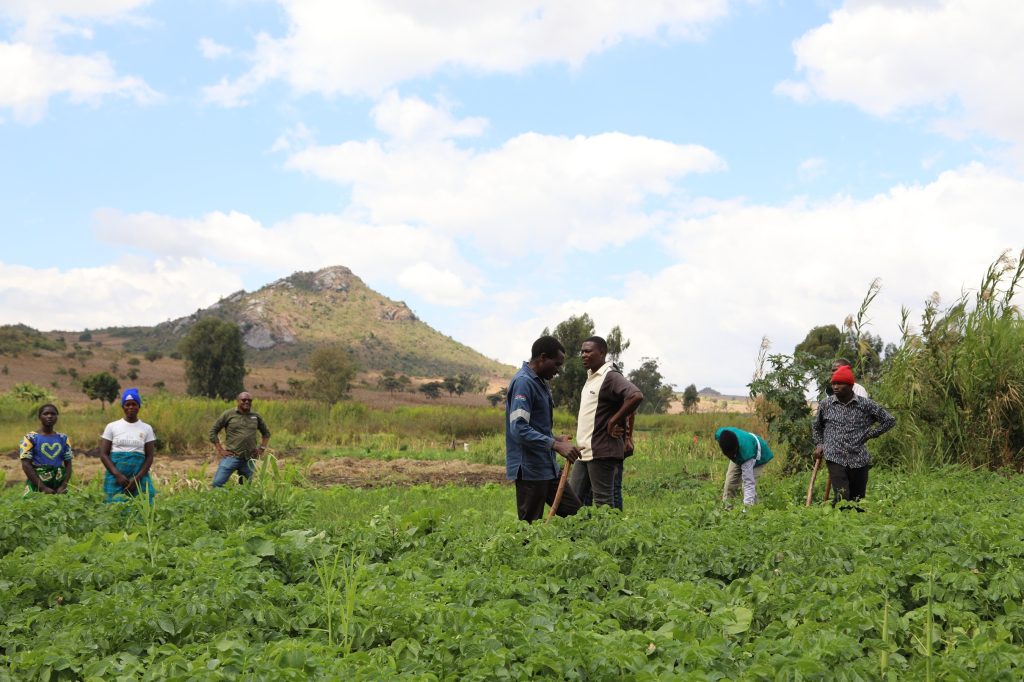
In the fertile fields of the Tsangano and Angónia districts, the effects of the financing are already being felt. Producer Inácio Carneiro is part of a partnership with Mitete Comercial, supported by Conecta Negócios, and currently works with 12 small farmers linked to the same production chain.
The activity focuses on the production of potatoes and vegetables, mainly destined for the market in the city of Tete. With the subsidy received, the group now has a refrigerated truck and a cargo truck, as well as certified seeds, warehouses and other inputs.
“The support has greatly boosted our activity, especially in terms of transport and certified seeds.
Thanks to the investment, potato productivity increased from 20 to 35 tons per hectare, while the cultivated area expanded from 10 to 50 hectares, thanks to the integration of small producers”, he said.
Another focus of the project is on training in agro-processing, considered essential to reduce the high post-harvest losses affecting the province.
Trainer Daryoxon Varenção, responsible for the course taught by Conecta Negócios in partnership with Gopa AFC, explains that many products end up being lost due to a lack of conservation and processing alternatives.
“This training serves to show small business owners that it is possible to transform products and add value,” the source said in an interview with AIM.
In addition to generating employment, agro-processing contributes to improving food availability throughout the year. “There are times of food scarcity, and with agro-processing, it is possible to preserve and make food available for longer,” he explained.
Despite the progress, structural challenges persist that threaten to limit the gains achieved. A large part of the agricultural production from the Tsangano and Angónia plateaus continues to be exported to Malawi and Zambia.
Pc/Am/