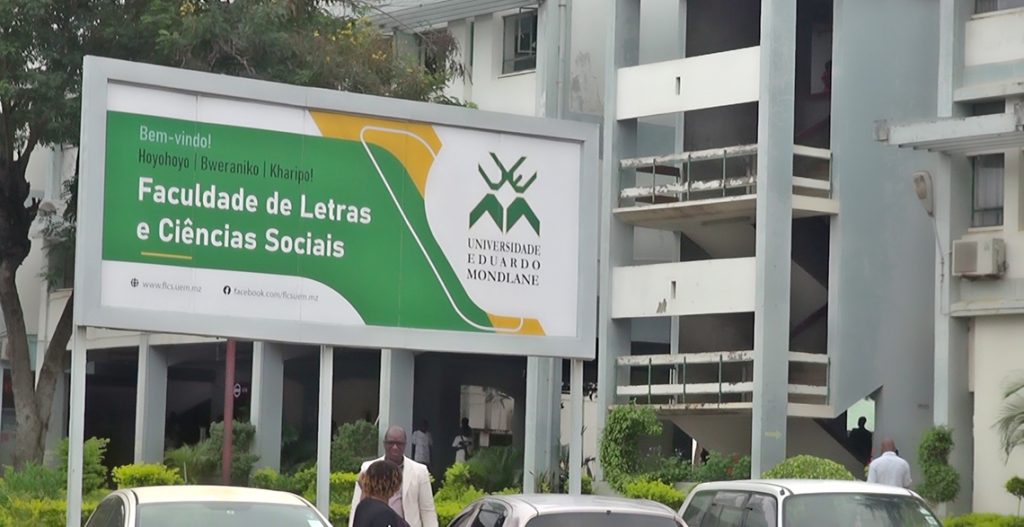
Maputo, 18 Jun (AIM) – Mozambique’s largest high education institution, the Eduardo Mondlane University (UEM), has revealed that the State funding per student fell from approximately two thousand dollars to about 800 dollars, which means that the average budget available to each student decreased by 67 percent in the last decade.
According to the academic Ângelo Macuacua – speaking on Wednesday during a lecture untitled “Funding of Public Higher Education Institutions in Times of Crisis”, held at the Faculty of Economics of UEM, in Maputo – in 2014 the budget per student was around three thousand dollars, while in 2024 it is close to one thousand dollars.
Macuacua explained that the reduction in resources occurs despite the advances made by the university in areas such as the qualification of the teaching staff, the increase in demand for higher education, and the growth of scientific production.
“We have increasingly fewer resources to guarantee the quality of teaching, support students, maintain infrastructure, and invest in scientific research. The structure of expenses financed by the State Budget has undergone profound changes over the last decade’, he said.
According to Macuacua, the institution’s overall budget has suffered a significant reduction, from approximately 110 million dollars in 2014 to approximately 47 million in 2024.
“While in 2014 a portion of the resources was allocated to investment, currently almost all state funding is absorbed by salaries and current expenses, leaving no room for investment in new infrastructure and equipment”, he said.
He explained that this situation limits the university’s capacity to expand its academic offerings, modernize laboratories, renovate libraries, and respond to the growing demand for higher education.
However, despite the difficulties, UEM has sought alternative sources of funding through postgraduate courses, evening programs, distance learning, consultancies, and participation in research projects funded by national and international partners.
For his part, Luciano Cordeiro, project manager and technological infrastructure specialist, argued that modernizing physical and digital infrastructure is one of the main strategies to address the financial constraints affecting the university and, in particular, the Faculty of Economics.
“The institution faces challenges related to aging infrastructure, increased maintenance costs, limited academic space, and the need to accelerate the digital transformation of its processes. The digitization of academic and administrative processes, the strengthening of virtual libraries, and the modernization of laboratories can contribute to efficiency gains and better use of available resources”, he said.
(AIM)
SNN/Am/