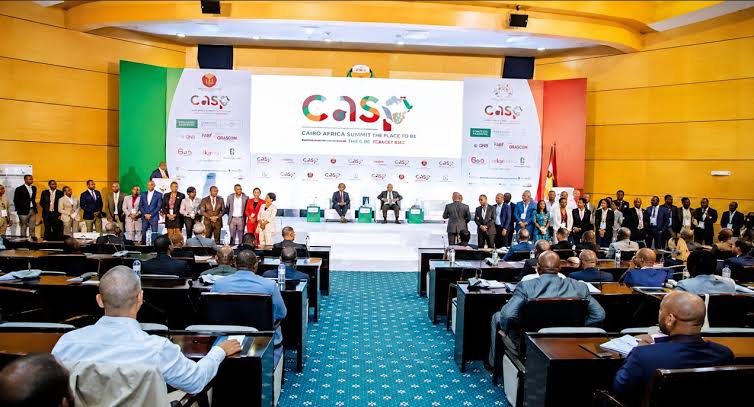
Maputo, 2 Jul (AIM) – Mozambique’s Confederation of Business Associations (CTA) has revealed that the 21st Annual Private Sector Conference (CASP) is expected to discuss investment opportunities valued at about 1.2 billion US dollars.
CASP is scheduled for July 14 and 15 in Maputo and it will discuss sectors considered strategic for the diversification of the country’s national economy.
According to CTA executive director, Teresa Muenda, speaking at the 13th Session of the Business Environment Monitoring Council (CMAN), CASP will feature two high-level panels, one led by the President Chapo, and the other by the Prime Minister, Maria Benvinda Levi.
The program also includes four bilateral investment promotion sessions between Mozambique and Japan, China, Portugal, and African countries, in addition to ten parallel sessions that will take place across three rooms at the Joaquim Chissano International Conference Center.
“There are signs of structural responses, evidenced by the inclusion, in the government’s Five-Year Plan 2025–2029, of policies oriented toward the diversification of the economy, the strengthening of national production, and the creation of more job opportunities for youth”, she said.
For her turn, the Prime Minister Benvinda Levi said that the government will push forward with deeper economic and institutional reforms to drastically improve the country’s business environment, slash transaction costs, and boost investor confidence.
“The government’s strategy focuses heavily on cutting red tape, digitizing public services, integrating electronic systems for citizens and investors, and intensifying the fight against corruption. Key milestones include the passing of the law establishing the Development Bank of Mozambique with its regulations due in the coming days as well as comprehensive reviews of the State Business Sector, Mining, and Petroleum laws”, she said.
According to Levi, macroeconomic stability is the bedrock of sustainable and inclusive development, “and this is collective responsibility that must be shared between the state and the private sector.”
“Only through a strategic partnership based on mutual trust, commitment, and shared responsibility can we build a more resilient and competitive economy that generates real opportunities”, the Prime Minister said.
However, CTA chairperson, Álvaro Massingue, warned that structural constraints persist, continuing to limit companies’ capacity to invest, produce, export, and generate jobs.
According to Massingue, the recent changes to the regimes for Value Added Tax (VAT), Corporate Income Tax (IRPC), the Simplified Tax for Small Taxpayers (ISPC), and the Excise Duty (ICE) continue to pose significant implementation challenges.
“Fiscal stability is one of the main determinants of investor confidence and the expansion of private investment. We therefore advocate for the reinforcement of predictability, simplification, and legal certainty within the tax system”, he said.
The chairperson also expressed concern over situations where companies holding tax benefit certificates issued by the Agency for the Promotion of Investment and Exports (APIEX) continue to be targeted by actions from the Tax Authority.
“This situation compromises the legitimate confidence of investors and highlights the need for greater institutional harmonization and better coordination among different State bodies”, he said.
RM/ZT/Am/