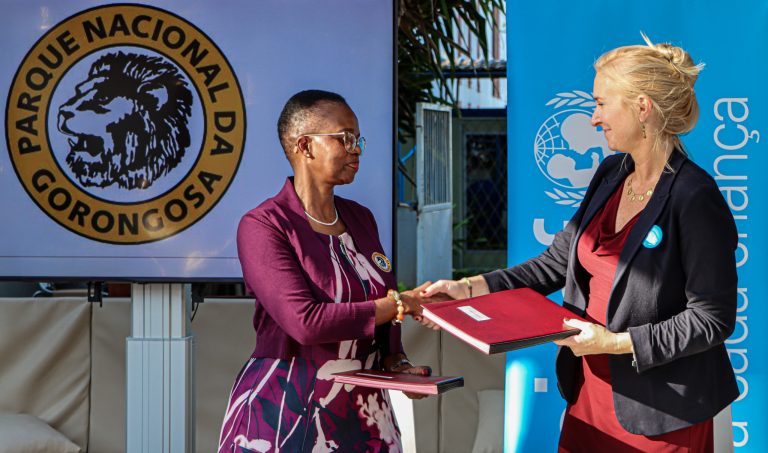
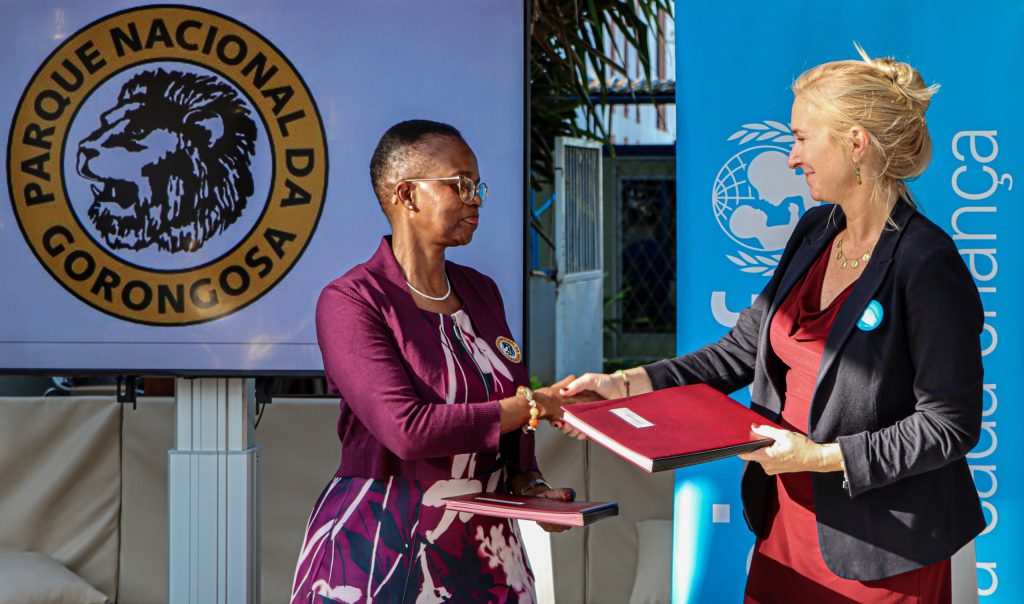
Maputo, 07 Oct (AIM) – The United Nations Children’s Fund (UNICEF) and the Gorongosa National Park (GNP) Restoration Project, in the central Mozambican province of Sofala, have signed signed a two-year memorandum of understanding aimed at equipping young people with skills to generate livelihoods.
The memorandum establishes three priority areas for intervention: ecosystem restoration and conservation; the development of learning skills and the creation of economic opportunities for young people; and the promotion of health services, sanitation, and good hygiene practices.
According to Mary Eagleton, UNICEF Representative in Mozambique, the agreement is also aimed at bringing services and opportunities closer to the communities while promoting environmental conservation and the exercise of children’s rights.
Eagleton explained that the environmental component includes initiatives such as tree planting and the creation or enhancement of community-based activities tailored to the local context, while educational facilities covered by the initiative are expected to serve as spaces for knowledge and participation, “enabling children and young people to better understand the importance of biodiversity and adopt environmentally sustainable practices.”
“The capacity-building component aims to create new opportunities for youth in the target communities, contributing to their development and strengthening local income-generating capacity. In the areas of health, local agents, community leaders, model mothers will play a role in disseminating information, mobilizing households, and encouraging behaviors that prevent disease”, she said.
Eagleton added that partnership is based on the shared understanding that nature conservation and the promotion of biodiversity must go hand in hand with efforts to ensure children grow up safe and healthy.
For his part, Aurora Malene, chairperson of the Gorongosa Restoration Project, said that the activities will be planned and implemented in collaboration with local authorities, schools, families, youth, community leaders, and other local stakeholders.
“This partnership combines UNICEF’s expertise with Gorongosa’s long-standing presence among these communities to create better opportunities for children and youth through improved health and education services”, she said.
According to Malene, the collaboration will make it possible to combine UNICEF’s technical expertise, its field presence, and its experience working with communities with the Gorongosa Restoration Project’s capacity in the areas of conservation, biodiversity, and local development.
(AIM)
MR/Am/