
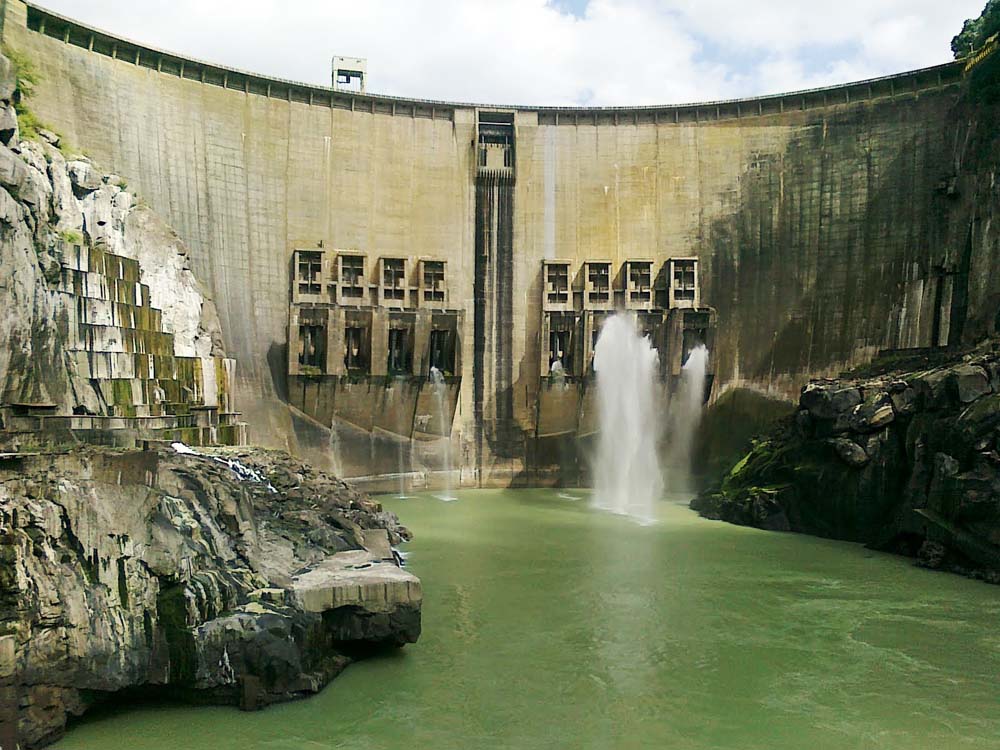
Maputo, 10 Sep AIM) – Reinforcing Moamba Major and Mapai dams against extreme weather events, in southern Mozambique, demands an investment estimated at around 1.5 billion US dollars.
According to Edgar Chongo, Director-General of the Southern Regional Water Administration (ARA-Sul), interviewed by AIM, the project still lacks funding because “these are large-scale infrastructure projects, and their implementation requires significant financial strength.”
Of the two projects, Moamba Major is estimated at around 500 million dollars, while the Mapai dam could cost one billion or slightly more.
Chongo views the dams as more than just major engineering works, “these are tools to address problems that directly affect people’s lives, specifically water shortages, recurring floods, and increasingly unpredictable periods of drought.”
With a projected storage capacity of 780 million cubic meters of water, Moamba Major is presented by ARA-Sul as a strategic infrastructure project designed to guarantee long-term water supplies for the Greater Maputo area while simultaneously strengthening climate resilience in the Lower Incomáti region.
The project is not new. Existing studies are currently being updated, including the dam’s design itself. This update is expected to be completed by early next year, at which point there should be greater precision regarding the project’s final cost.
According to Chongo, the Pequenos Libombos Dam, built in 1987 to meet the supply needs of Greater Maputo, was conceived against a demographic backdrop vastly different from todays. Nearly four decades later, the population has grown significantly, and the infrastructure’s capacity is no longer sufficient on its own to keep pace with demand.
Alternatives have already been explored, including the Corumana Dam, but that facility is already committed to supplying sectors such as the sugar industry and other consumers. It is against this backdrop that the Moamba project has once again become a priority.
While Moamba Major plays a decisive role in water supply, Mapai emerges primarily as a structural response to the vulnerability of the Limpopo Valley. The dam is expected to create additional storage capacity and help regulate river flows, thereby reducing the population’s exposure to floods and ensuring water availability during droughts.
Currently, the Limpopo River lacks a dam capable of regulating its flow. Water originating in upstream countries enters the system and moves downriver with little capacity for regulation.
“Floodwaters coming from the countries with which we share the Limpopo River flow through unimpeded. Therefore, the dam will help provide this regulation. The financial aspect is not the only obstacle to its realization. The project could affect around 21 communities, necessitating the preparation and implementation of resettlement processes, which increases the social, technical, and financial complexity of the undertaking”, he said.
He also said that ARA-Sul is focusing on digital transformation and the installation of modern monitoring systems, including automatic and telemetry stations capable of transmitting data in real time.
(AIM)
Pc/Am/